Carbon monoxide is colorless, odorless and produced by every fuel-burning appliance in your home when combustion is incomplete or venting is compromised. Unlike every other furnace fault, it gives you no warning you can detect yourself — which is why a working alarm is not optional equipment.
California law requires carbon monoxide alarms in every dwelling with a fuel-burning appliance, an attached garage or a fireplace. That covers essentially every home in the Temecula Valley with a gas furnace.
What Actually Produces It
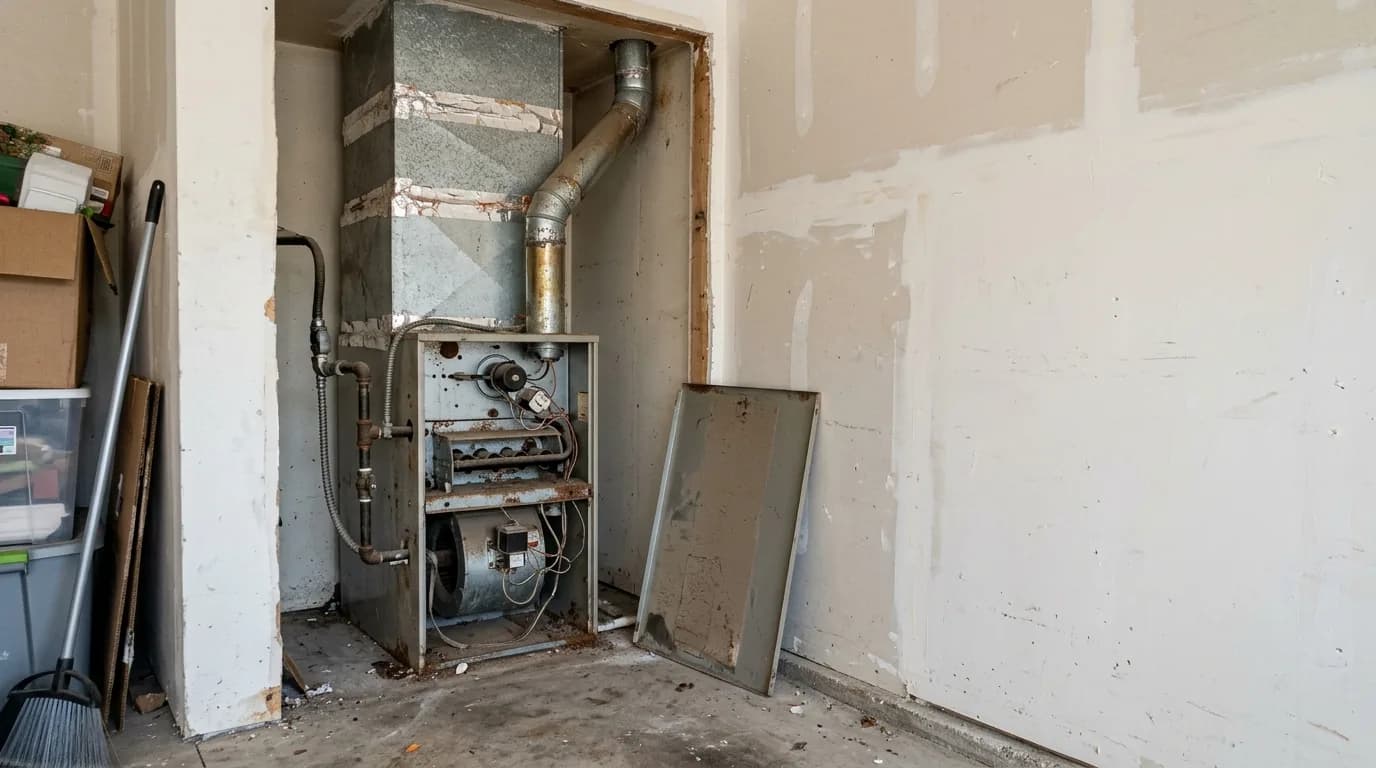
A gas furnace burns natural gas inside a sealed heat exchanger. Your household air blows across the outside of that exchanger, picks up heat, and goes to the registers. The combustion gases stay on the inside and go up the flue. Those two air streams are never supposed to meet.
- A cracked heat exchanger breaches that separation and lets combustion gas into the supply air. This is the classic and most serious cause.
- A blocked or disconnected flue means the combustion gas has nowhere to go but back into the house. Bird nests, debris and corrosion are the usual culprits.
- Incomplete combustion from dirty or misaligned burners, incorrect gas pressure, or restricted airflow produces far more carbon monoxide than clean combustion does.
- Insufficient combustion air in a closet or garage that has been sealed up or filled with storage.
- Backdrafting, where an exhaust fan or a tight house pulls flue gases back down the vent.
That last one is worth knowing about because it is the one homeowners create accidentally. A powerful kitchen range hood in a well-sealed house can depressurize it enough to pull combustion gas back down a flue.
Symptoms, and Why They Get Missed
The early symptoms are headache, dizziness, nausea, fatigue and confusion. They look like flu, and they look like being tired. Two patterns are the tell:
- Symptoms that improve when you leave the house and return when you come back
- More than one person in the household feeling unwell at the same time, pets included
If you notice either, get everyone outside first and call from outside. Do not spend time investigating indoors.
Alarms: Where They Go and How Long They Last
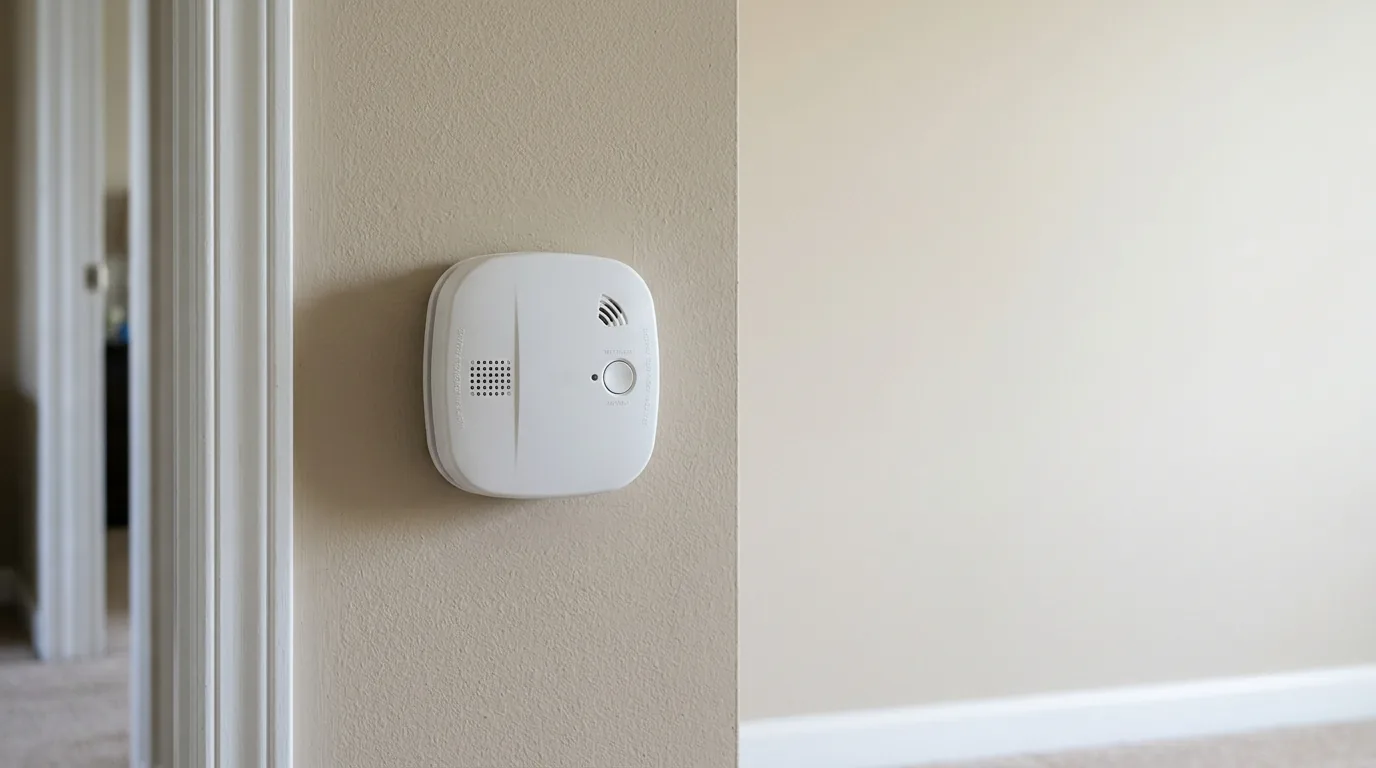
- Install one on every level of the home and within earshot of every sleeping area.
- Do not mount one directly next to the furnace or a gas appliance — nuisance trips during normal startup are common there.
- Test every alarm at the start of the heating season, and replace batteries on a schedule rather than when one chirps at 3am.
- Check the manufacture date printed on the unit itself. Carbon monoxide sensors have a service life, commonly five to ten years depending on the model, and an expired alarm can look and test fine while detecting nothing.
- Combination smoke and CO alarms are fine, but note that the two sensor types can have different lifespans.
- Replace the whole unit at end of life. There is no way to service the sensor.
The expired-alarm problem is the one we see most often. A device bought when the house was built in 2012 is well past its service life and is functionally a decoration.
What a Heating Inspection Looks For
This is the part of a tune-up that justifies the appointment. A proper heating inspection is not a filter change — it is a combustion safety check.
- Visual and instrument inspection of the heat exchanger for cracks and corrosion
- Burner condition, flame pattern and flame sensor operation
- Gas pressure measured against the manufacturer specification
- Flue draft verified, and the vent run inspected for blockage, disconnection and corrosion
- Combustion air supply to the appliance space
- Safety controls — limit switch, rollout switch, pressure switch — confirmed functional
- Carbon monoxide measured in the supply air stream
A cracked heat exchanger is the finding that ends a furnace's life, and there is no honest repair for it. If you are facing that, our post on when it is time to replace a furnace covers the decision, and installation and upgrades covers the work.
If an Alarm Sounds
- Get everyone out of the house, including pets.
- Call 911 or the gas utility from outside.
- Do not go back in to open windows or look for the source.
- Do not reset the alarm and go back to bed. That is the response that kills people.
- Have the appliances inspected before anything is run again.
For general guidance on carbon monoxide in the home, the U.S. Consumer Product Safety Commission maintains a public information center.
Baker Air is licensed and insured, California Contractor License #1098493, serving Temecula, Murrieta, Menifee, Winchester, Wildomar and Lake Elsinore. Book a combustion safety inspection at (951) 348-0686 or through our contact page.
Written by
The Baker Air Team
Family-owned HVAC contractor · Winchester, CA · CSLB #1098493