Running your heater does not remove any water from the air. It still makes the air feel dramatically drier, and that apparent contradiction is the whole explanation for the static shocks, the cracked lips and the scratchy throat every January.
Here is the mechanism. Warm air can hold far more moisture than cold air. When your furnace takes cool outdoor-influenced air and heats it, the actual amount of water in that air does not change — but its capacity goes way up, so the relative humidity falls. Air at a comfortable 45 percent outdoors can land in the teens once it has been heated indoors.
Why Inland Southern California Has It Worse
- Our winters are dry to begin with. Outdoor humidity here is low compared with most of the country, so there is less moisture coming in to start with.
- Santa Ana wind events bring desert air with single-digit relative humidity, and every one of them scours moisture out of the house.
- Homes here are not built as tightly as cold-climate housing, so there is a steady exchange with that dry outdoor air.
- Our heating season is short and intermittent, which means nobody installs the whole-home humidification that is routine in colder regions.
What Dry Air Actually Does
- Dry skin, cracked lips, nosebleeds, and irritated eyes
- Sore or scratchy throats, and worse symptoms for anyone with asthma or allergies — dry nasal passages are less effective at filtering
- Static shocks on every doorknob and carpet
- Gaps opening in hardwood flooring, and furniture and cabinetry joints shrinking
- Instruments going out of tune and wood items cracking
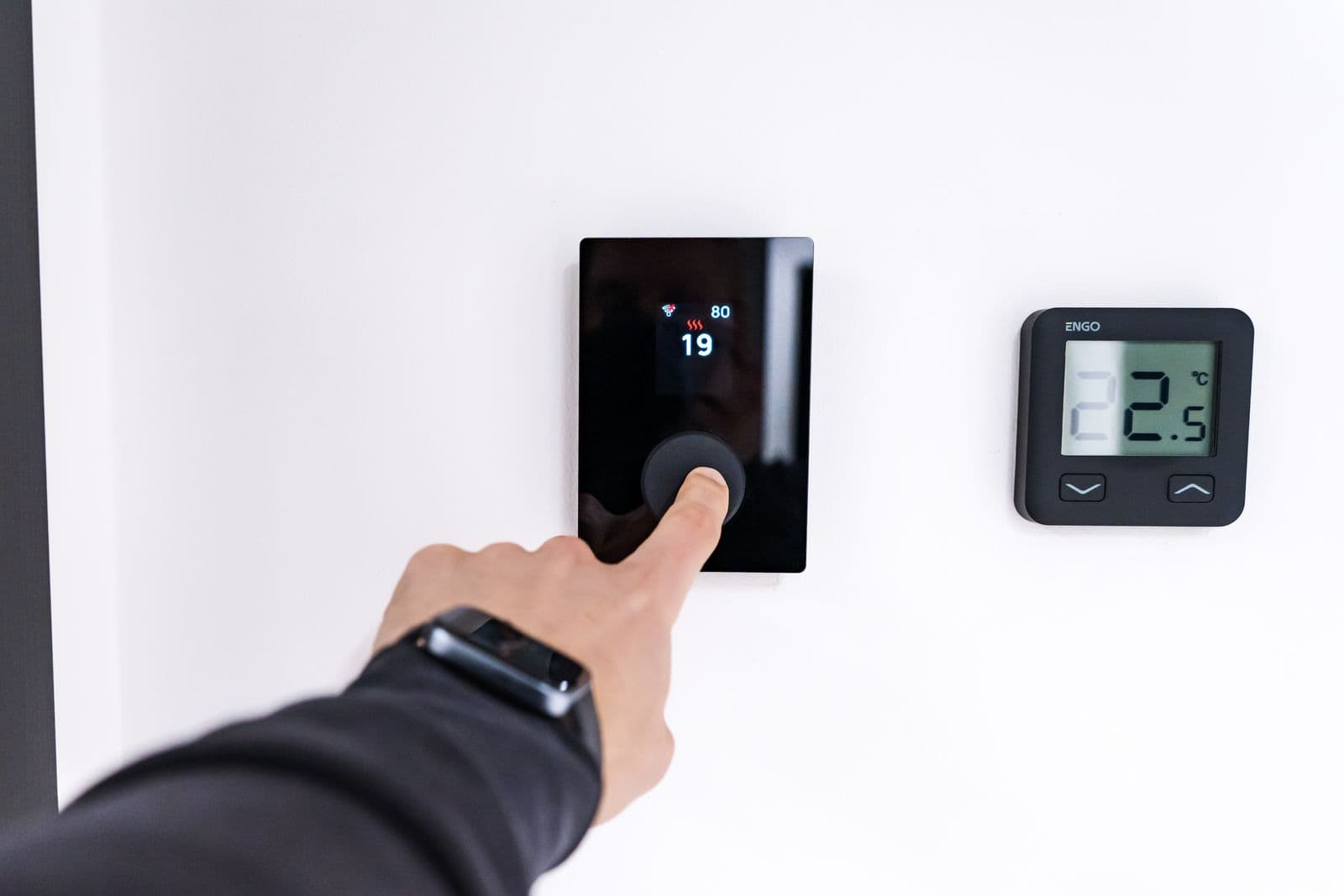
- A house that feels colder than the thermostat says, because dry air increases evaporative cooling off your skin — which leads people to turn the heat up, which makes the air drier still
That last loop is the expensive one. People respond to dry-feeling cold by raising the setpoint, which lowers relative humidity further, which makes the room feel no warmer.
The Number to Aim For
Between 30 and 50 percent relative humidity indoors. Below 30 percent is where the comfort and health complaints start. Above 50 percent in winter risks condensation on cold surfaces — windows, exterior wall corners, closets — and that is a mold problem rather than a comfort one.
Buy a hygrometer before you buy anything else. They cost very little, and knowing whether you are at 18 percent or 38 percent completely changes what is worth doing. Guessing at humidity is how people end up solving the wrong problem. Our post on winter indoor air quality covers the related issues.
What Actually Helps
Portable humidifiers
The practical answer for most homes here, given the short season. Size it to the room and run it where it matters — usually bedrooms overnight. Clean it on the manufacturer's schedule without exception; a neglected humidifier becomes a biological aerosol generator, which is a worse problem than dry air.
Whole-home humidifiers
Installed at the air handler and feeding moisture into the supply duct. More effective and far less maintenance than running several portable units, and genuinely worth considering if dry air bothers your household every single winter. Less common here than in cold climates purely because the season is short — but the comfort difference is real. This falls under indoor air quality work.
Free things that move the needle
- Lower the thermostat slightly. Less heating means less drying, and the air feels warmer at higher humidity anyway.
- Dry laundry on a rack indoors rather than in the dryer.
- Leave the bathroom door open after a shower instead of running the exhaust fan to completion.
- Leave pots to cool on the stovetop rather than covering them.
- Houseplants, modestly — the effect is small but real.
- Seal obvious drafts. Less exchange with dry outdoor air means less drying.
Do Not Over-Correct
The failure mode in the other direction is condensation. If you run humidity above about 50 percent in winter, moisture condenses on the coldest surfaces in the house — single-pane windows, aluminum frames, the inside face of exterior walls and the back corners of closets. That is how a dry-air fix becomes a mold problem.
Watch for water on window glass in the morning. That is the signal to back off, and it will show up well before anything grows.
When It Is Not Just Winter Air
A few dryness complaints are actually airflow or filtration problems wearing a disguise. Heavily restricted airflow, significant duct leakage pulling unconditioned attic air into the supply, or an aggressively over-filtered system can all make a house feel harsher than the humidity number alone explains. If your home is also dusty, unevenly heated, or slow to warm, start with duct performance and filter selection before buying humidifiers.
Baker Air serves Temecula, Murrieta, Menifee, Winchester, Wildomar and Lake Elsinore. For humidification options or an indoor air quality assessment, call (951) 348-0686 or get in touch.
Written by
The Baker Air Team
Family-owned HVAC contractor · Winchester, CA · CSLB #1098493