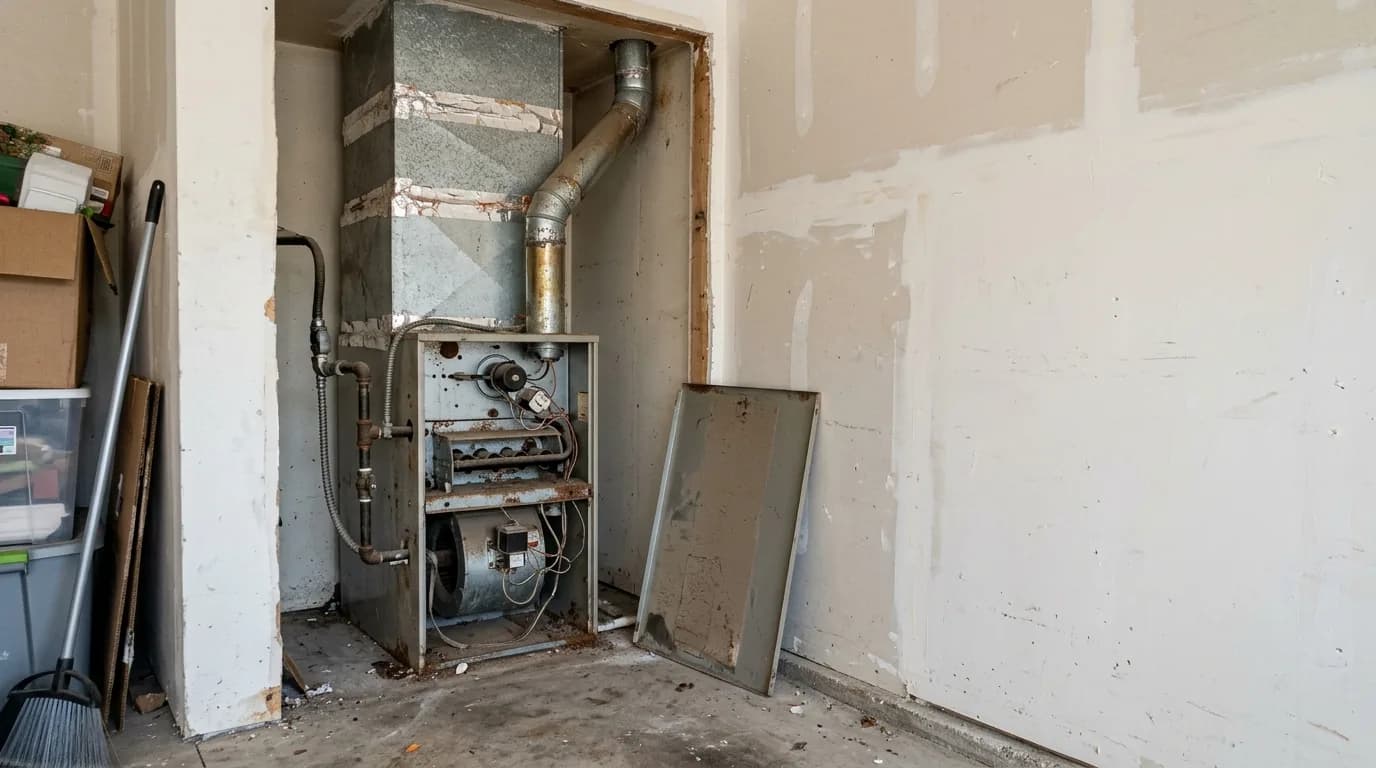
A gas furnace in the Temecula Valley runs a small fraction of the hours it would in a cold climate — a few weeks of real demand rather than five months. That means age alone is a weak signal here, and plenty of twenty-year-old furnaces in this valley are mechanically fine.
What decides it is not the number on the data plate. It is the specific fault, what the repair costs against a replacement, and whether the rest of the system is about to need the same conversation.
The One Finding That Ends It Immediately
A cracked heat exchanger. There is no honest repair — the exchanger is the barrier between combustion gases and the air you breathe, and a breached one is a carbon monoxide path into the house. Replacement of the exchanger alone is usually close enough to the price of a new furnace that it is rarely the right call, and on an older unit the part may not be available at all.
If an inspection finds one, the furnace should be red-tagged and taken out of service until it is replaced. Our post on carbon monoxide and gas furnace safety explains why that is not an overreaction.
Age Thresholds, With Local Context
- Under 10 years — repair, almost always. The equipment has most of its life left and parts are current.
- 10 to 15 years — repair unless the fault is major. This is where the cost comparison starts to matter.
- 15 to 20 years — judgment call driven by the specific repair and the condition of the rest of the system.
- Over 20 years — plan a replacement even if it is running. Parts availability becomes the binding constraint.
The light duty cycle here shifts all of those upward relative to published averages. A furnace that would be exhausted at fifteen years in a cold climate may be at the midpoint of its service life in Winchester.
The Repairs Worth Making and the Ones That Are Not
Generally worth repairing at almost any age:
- Igniter, flame sensor, thermocouple
- Capacitor or blower motor
- Control board, on a unit otherwise in good condition
- Pressure switch, limit switch, rollout switch
- Gas valve, on a newer unit
Push toward replacement, particularly past fifteen years:
- Cracked or corroded heat exchanger — always
- A repair quote approaching half the cost of a new system
- Second or third significant repair within two years
- Obsolete parts requiring salvage sourcing
- A furnace that was undersized or oversized from the start
That last one is worth checking rather than assuming. A system that never heated the house properly is not going to start now, and replacing like-for-like repeats the original mistake. Our post on why oversized equipment performs worse covers the sizing logic, which applies to heating as much as cooling.
Replace the Furnace Alone, or the Whole System?
This is the question that actually matters financially, and it comes up because the furnace and the air conditioner share the blower, the cabinet and the ductwork.
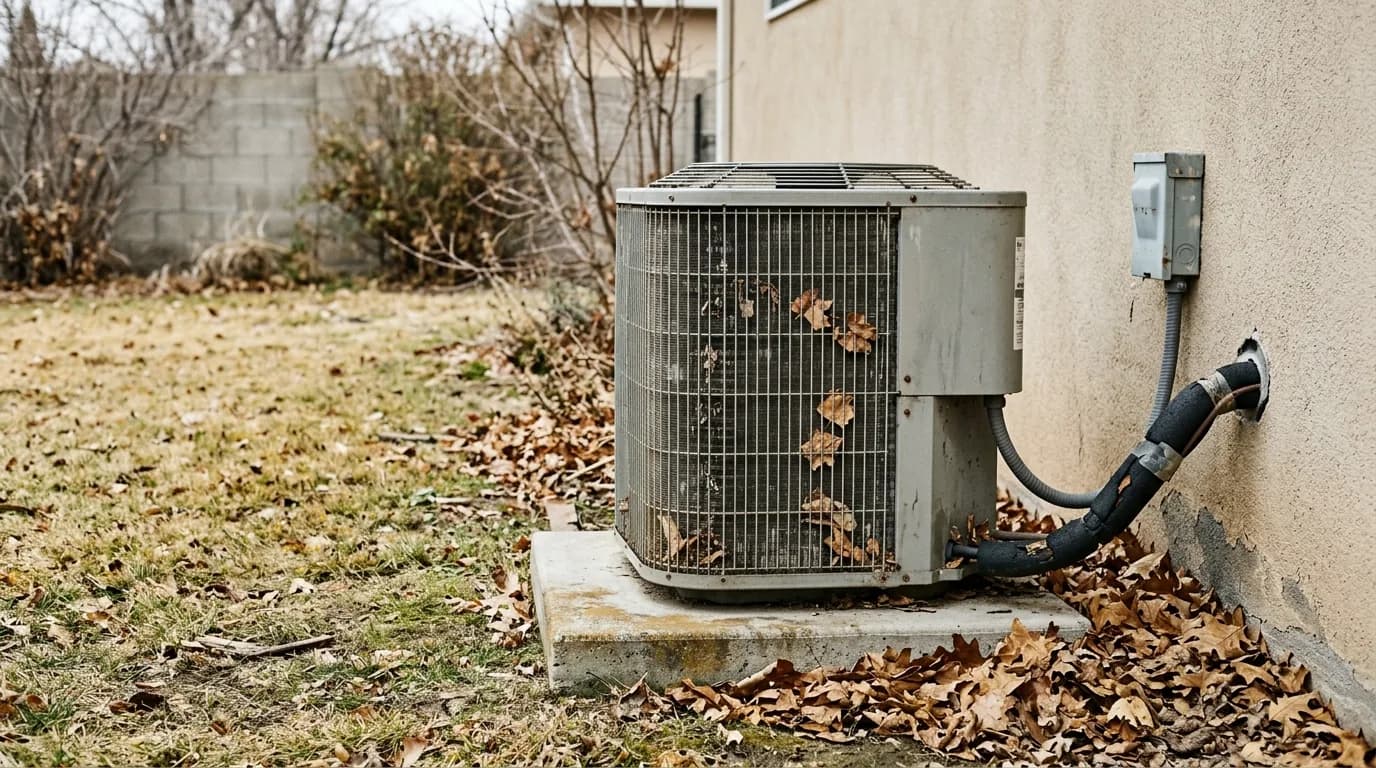
- If the AC is also near end of life, doing both at once is meaningfully cheaper than two separate jobs, and it avoids a mismatched pairing.
- If the AC is young and healthy, replacing the furnace alone is reasonable — but confirm the new furnace's blower is compatible with the existing coil and the AC's airflow requirements.
- If you are replacing both anyway, that is the natural moment to consider a heat pump instead, because the decision cost is already being paid.
On that last point, the climate here genuinely favors heat pumps more than most places, for the simple reason that the heating load is small and mild. Our heat pump comparison works through the honest version of that tradeoff, and our AC installation cost guide covers how replacement pricing is structured.
What Else to Fix While the System Is Open
A replacement is the one moment when the ductwork, the return sizing and the thermostat are all accessible and already being disturbed. Addressing a known duct problem during a changeout costs a fraction of what it costs as a standalone job later, and leaving it means putting new equipment onto a distribution system that was already underperforming.
Permits matter too. Equipment changeouts in Riverside County require them, and an unpermitted install creates real problems at resale — see our post on HVAC permit requirements in Riverside County.
Timing
If the furnace is working but you know it is near the end, replacing it in the off season is the cheaper and calmer version of the same job. A furnace that fails in January is replaced on whatever timeline and at whatever price availability allows.
Baker Air has served the Temecula Valley for over 15 years, family-owned, California Contractor License #1098493. For an honest repair-or-replace assessment call (951) 348-0686, see installation and upgrades, or request a quote.
Written by
The Baker Air Team
Family-owned HVAC contractor · Winchester, CA · CSLB #1098493