Santa Ana wind events in the Temecula Valley are a distinct HVAC challenge. The dry, downslope winds — which regularly reach 30 to 50 mph through the mountain passes near Lake Elsinore, Wildomar, and Murrieta — carry fine dust, pollen, debris, and wildfire smoke over distances that can blanket the entire region in hours. Your HVAC system is on the front line of all of it.
The damage isn't dramatic. It accumulates. A condenser coil that's 20% blocked with compacted debris runs at higher head pressure, works harder, and fails sooner. A filter that was clean on Monday can be saturated by Thursday after a sustained wind event. Here's what to do before, during, and after Santa Ana conditions to protect your system.
Before a Wind Event: What to Check
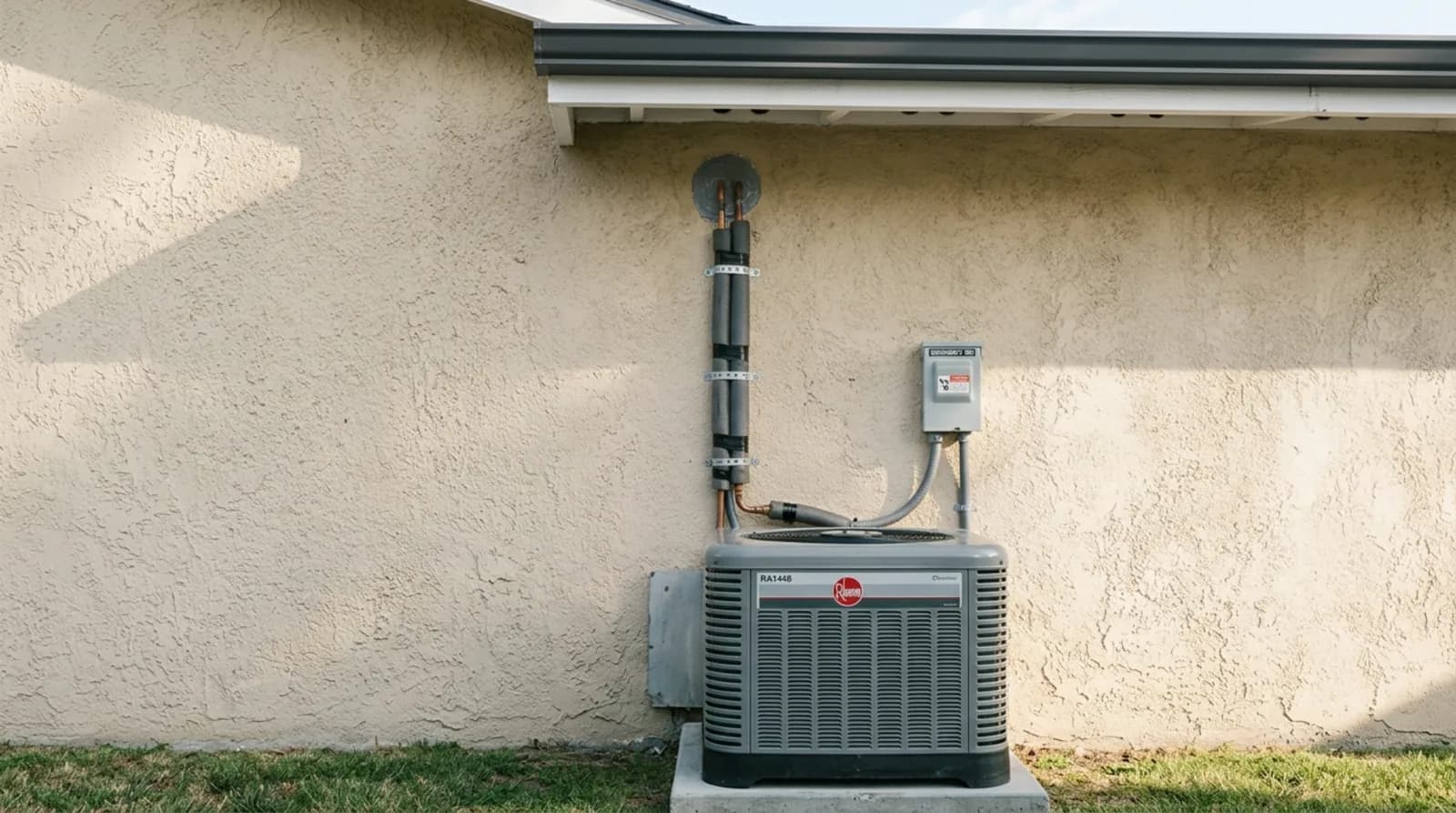
When the National Weather Service issues a Santa Ana wind advisory for Riverside County, it's worth a quick walk around your outdoor condenser unit. Clear a 2-foot radius of any loose debris, dead vegetation, or stored items that could be blown into the coil fins during the event. Light materials like plastic bags, leaves, and cardboard can press against the condenser fins and restrict airflow significantly.
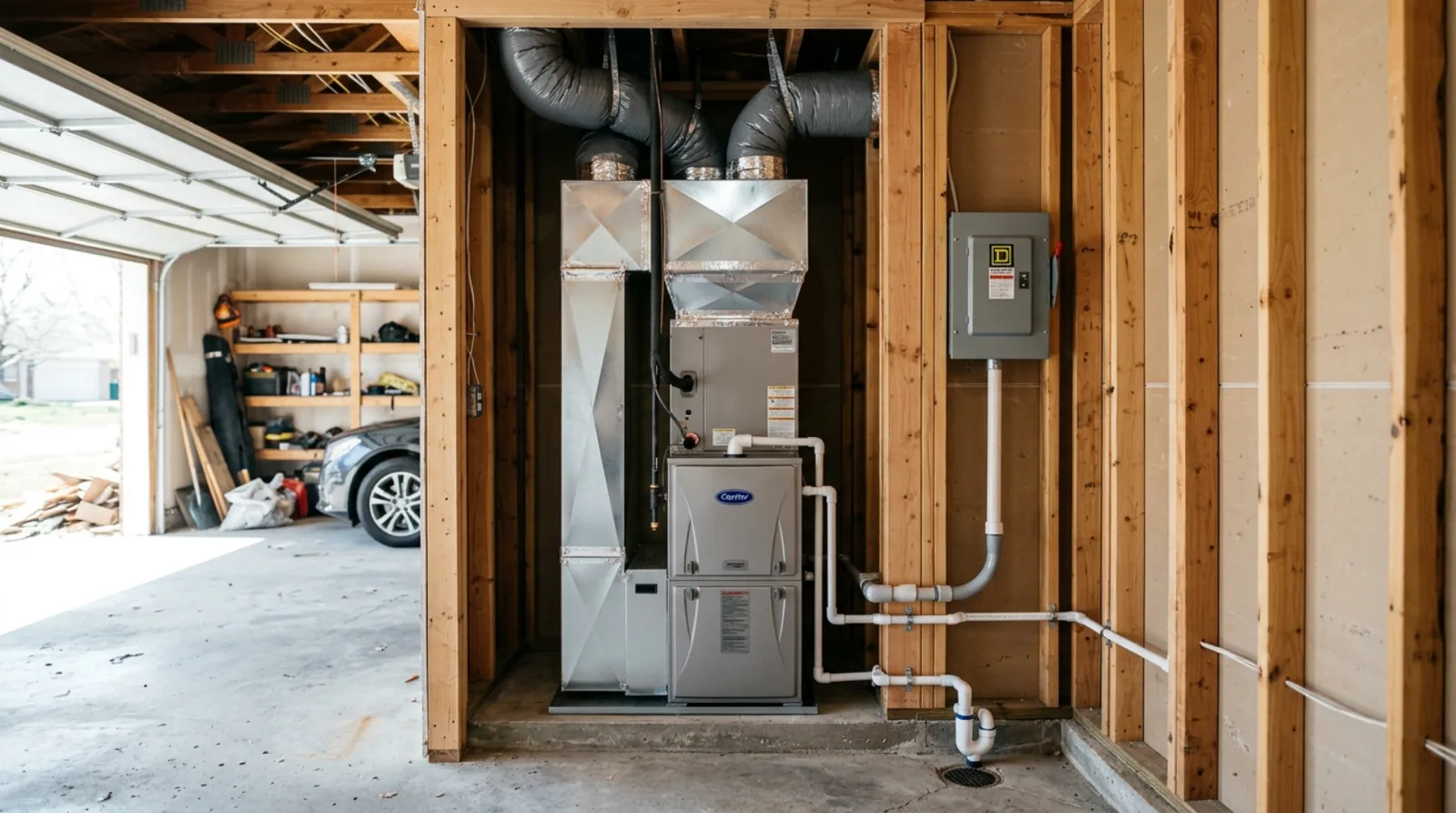
Also confirm your current filter isn't already overdue for replacement. Sending a wind event through a near-clogged filter accelerates the problem dramatically. If you're within 30 days of your normal replacement schedule, change the filter before the wind arrives rather than after. Homes in Winchester, Temecula, and along the I-15 corridor tend to accumulate dust faster than higher-elevation areas, so erring toward more frequent replacement during wind season is worthwhile.
During a Wind Event: Should You Run Your System?
Your HVAC system can run during Santa Ana conditions — but with some awareness. If you're running the system for heating during a cool fall wind event, the outdoor unit (heat pump or AC) is pulling in ambient air that's carrying significantly more particulate than normal. The condenser coil gets loaded faster.
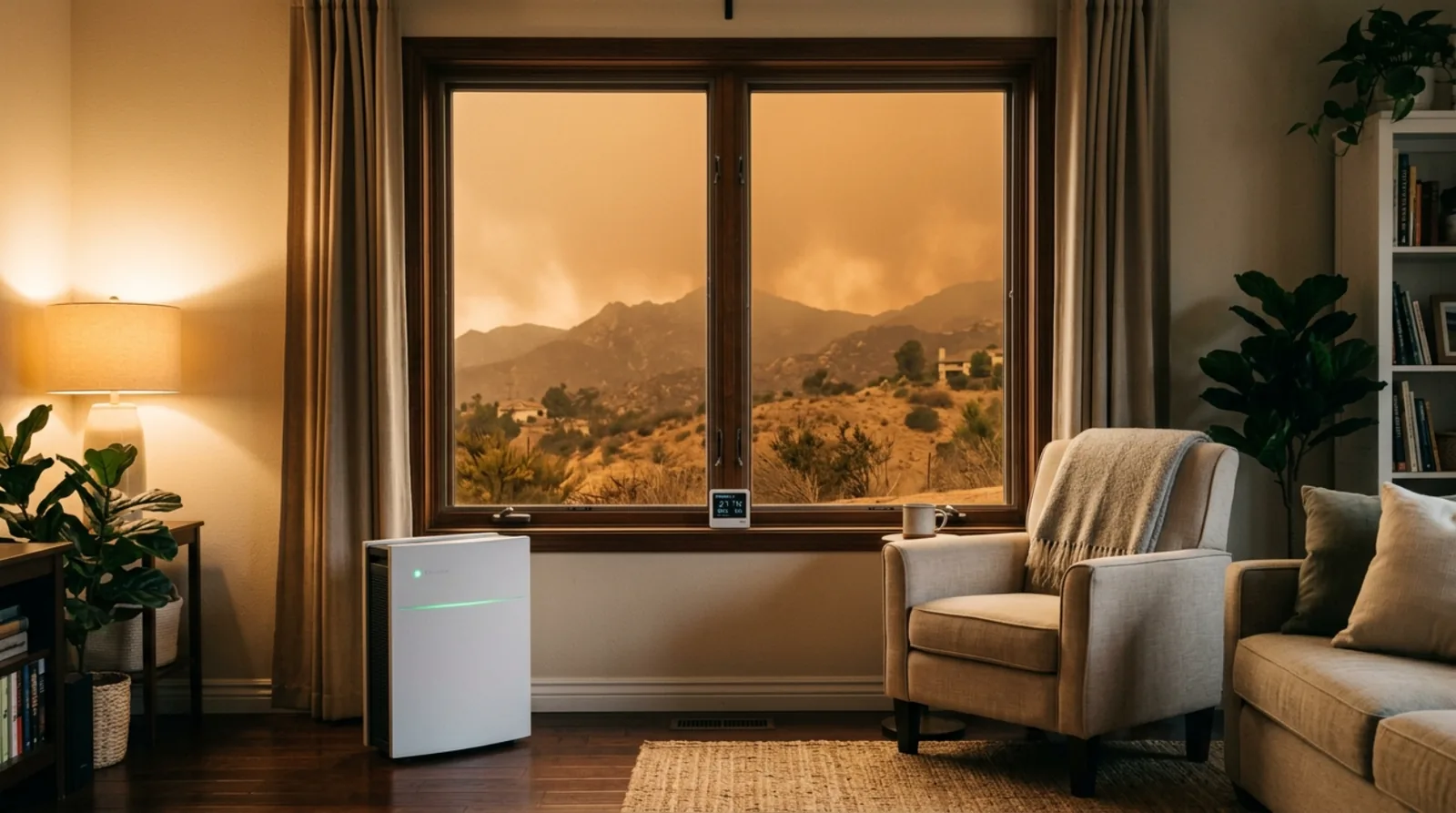
If wildfire smoke is present alongside the wind — which happens frequently during November events in this part of Riverside County — consider running the system in recirculation mode (fan on, no fresh air intake) if your system supports that. More practically, make sure you have a MERV 11 or MERV 13 filter installed, not a standard fiberglass filter, to capture fine smoke particles recirculating through your indoor air. See our post on winter indoor air quality in Wildomar and Lake Elsinore for more detail on filter ratings and smoke particle capture.
Condenser Fin Damage: What to Watch For
The aluminum fins on your condenser coil are fragile. Wind-driven gravel, palm frond debris, and other hard materials can bend or compress fins — reducing the coil's ability to transfer heat. Bent fins don't recover on their own, though a technician can comb them straight with a fin comb tool during routine maintenance.
After a significant wind event, take a look at your condenser coil fins. If you see areas that look compressed or matted — rather than the open, parallel fin structure that covers most of the coil — that's worth noting for your next maintenance visit. Heavily damaged fin sections meaningfully reduce system efficiency and put more load on the compressor during the next summer cooling season.
Post-Wind Condenser Cleaning
After a major Santa Ana event, a condenser coil rinse is good practice. This doesn't require a technician — a gentle garden hose spray from inside the coil outward (top-down, through the fan) can clear most surface debris. Avoid pressure washing, which can bend fins and damage coil coatings. If the fins are caked with fine dust that doesn't rinse clear, a professional coil cleaning with appropriate coil cleaner is the next step.
Baker Air's Comfy Club seasonal maintenance visits include a condenser coil inspection and cleaning. Scheduling a fall maintenance visit after wind season has passed (typically late November through December in the Temecula Valley) means you start the next cooling season with a clean system rather than carrying accumulated debris into summer.
Filter Replacement Cadence During Wind Season
Standard advice is to change your filter every 60 to 90 days. During active Santa Ana wind season in the Temecula Valley — typically October through February, with peak events often in October and November — the right cadence for many homes is closer to 30 to 45 days. Homes near open land, dirt roads, or with dogs and cats indoors are at the higher end of that range.
If you buy a case of filters and commit to monthly changes during wind season, the cost is minimal (typically $5 to $15 per filter depending on MERV rating) and the benefit to system efficiency and indoor air quality is real. This is also a habit that protects against a clogged filter causing the limit switch trips and short cycling that lead to more expensive repairs.
The National Weather Service San Diego office publishes Santa Ana wind advisories for Riverside County — bookmark it as a trigger for the pre-wind checklist above.
What to Do Next
Baker Air Inc. serves homeowners across Temecula, Murrieta, Menifee, Wildomar, Winchester, and Lake Elsinore. If your system needs a post-wind condenser cleaning, a filter upgrade for wind season, or a full fall maintenance visit, call (951) 348-0686 or schedule online. You can also read about whole-home air quality improvements that make a meaningful difference during high-particulate wind events.
Written by
The Baker Air Team
Family-owned HVAC contractor · Winchester, CA · CSLB #1098493