Every August, the same sequence plays out across the Temecula Valley. A heat ridge parks over Southern California, the state grid operator issues a Flex Alert for 4 p.m. to 9 p.m., and a few thousand homeowners in Temecula, Murrieta, and Menifee find out the hard way that their air conditioner does not like voltage sag.
Grid stress does not usually kill an AC system outright. What it does is take an already-marginal component — a weak capacitor, a pitted contactor, a compressor with a hard start — and finish it off. Knowing what happens electrically helps you protect the equipment and decide when to actually call for service.
What a Flex Alert Is and Is Not
A Flex Alert is a voluntary conservation call issued when statewide demand is projected to outstrip comfortable supply margins, typically during the late-afternoon ramp when solar output falls off and air conditioning load is still near peak. California's Flex Alert program publishes the alerts and the conservation windows.
It is not a rotating outage notice and it is not a warning that your power is about to go out. It is a request. But the conditions that trigger one are the same conditions that produce localized voltage drops, and those are hard on motors.
Why Low Voltage Is Rough on an Air Conditioner
Motors draw current in inverse proportion to supply voltage for a given load. When line voltage sags during a demand peak, the compressor and condenser fan motors compensate by pulling more amperage, which produces more heat in the windings. Do that for several hours a day across a two-week heat wave and insulation degrades faster than it should.
The component that usually gives up first is the run capacitor. Capacitors are heat-sensitive by design, they sit inside a metal cabinet in full afternoon sun, and they lose capacitance gradually. A capacitor that tests at 80 percent of its rated microfarads will start a compressor fine at 240 volts and fail to start it at 220.
The Hard-Start Symptom Worth Recognizing
If your system hums for a second or two before the fan spins, or the lights in the house dim briefly every time the AC kicks on, the compressor is struggling to start. That is a capacitor or start-component issue in most cases, and it gets dramatically worse during grid stress.
Left alone, a hard start eventually becomes a locked rotor, which trips the breaker and can burn out the compressor — a repair that lands squarely in replace-or-repair territory. This is one of the symptoms covered in our list of warning signs an AC is about to fail in triple-digit heat, and it is the one most likely to surface on a Flex Alert afternoon.
What to Do When the Power Actually Goes Out
- Turn the thermostat to Off, not just up. This prevents the system from restarting the instant power returns.
- Leave it off for at least five minutes after power is restored, so refrigerant pressures equalize across the compressor.
- Turn the thermostat back on and set it to your normal temperature, not lower.
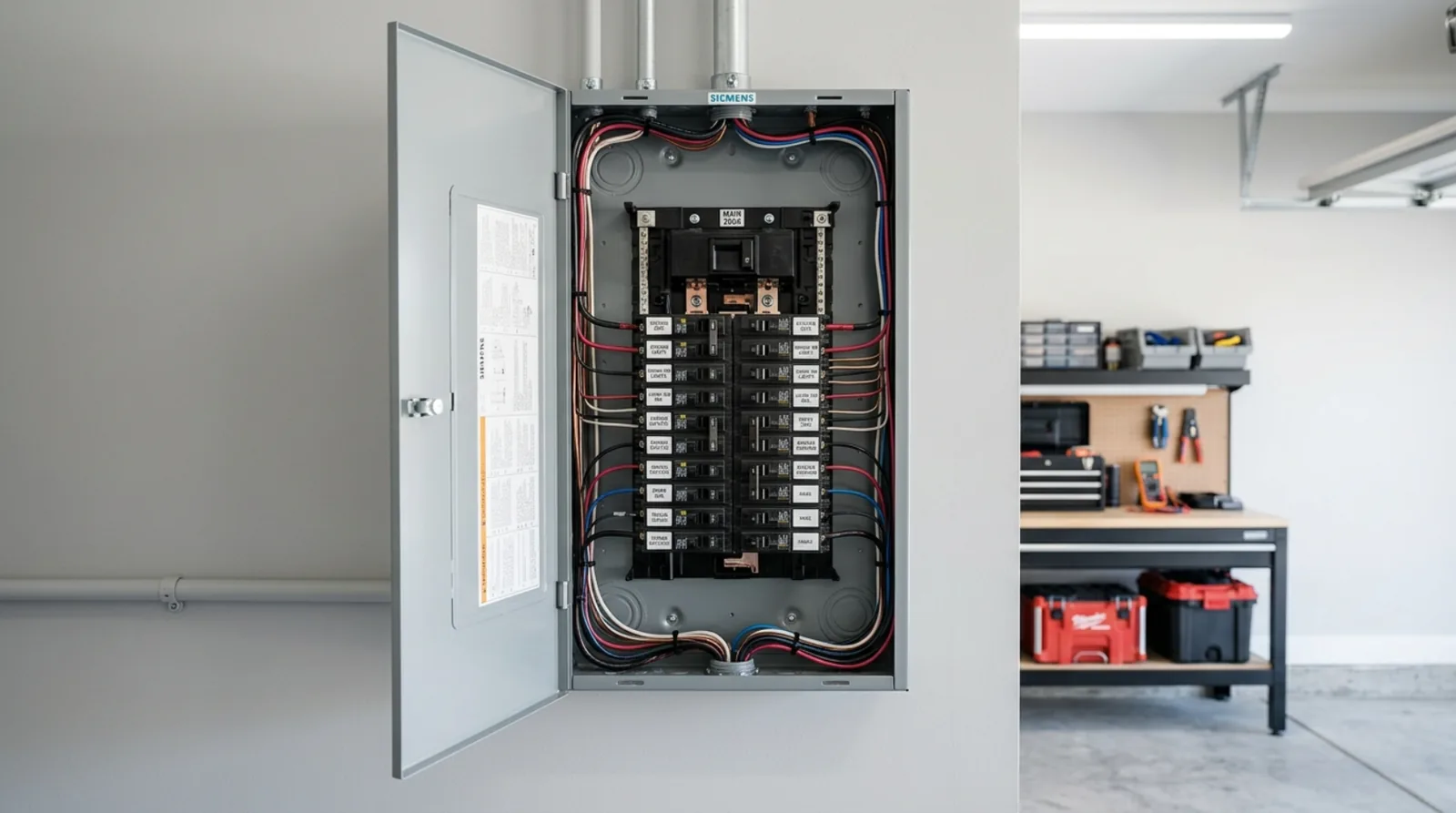
- Check the breaker panel if nothing happens. A brownout can trip a breaker without tripping it fully to the off position — push it all the way off, then back on.
The five-minute wait matters more than most people realize. Restarting a compressor against high head pressure is one of the few things that can damage an otherwise healthy unit in a single event. Most modern thermostats enforce this delay automatically, but older mercury and basic digital units do not.
Do Not Drop the Setpoint to Catch Up
After an outage the house is warm and the instinct is to set the thermostat to 68°F to cool it down faster. It does not work that way. The system cools at a fixed rate regardless of setpoint; all a lower number does is guarantee a longer continuous run at the hottest, most expensive part of the day.
Set it to your normal temperature and let it recover. If you are on a time-of-use plan, pre-cooling the house before the peak window is the strategy that actually saves money — the approach we walk through in our post on smart thermostats and SCE time-of-use plans.
Protecting the Equipment Before Peak Season
- Have the run capacitor tested, not just inspected — capacitance degrades invisibly
- Check contactor points for pitting and replace them before they weld
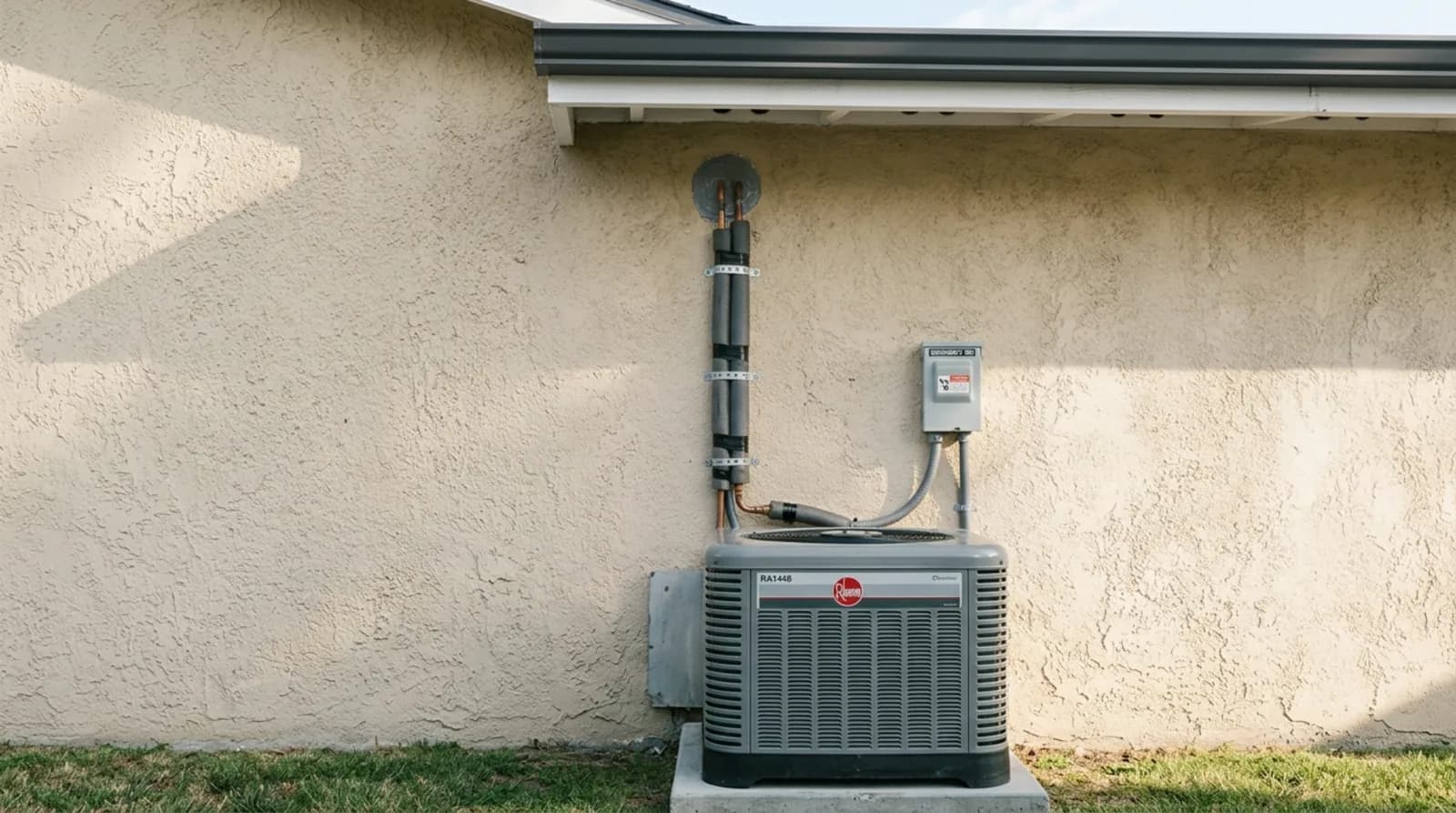
- Verify the disconnect and whip connections are tight and free of corrosion
- Clean the condenser coil so the system is not already running at elevated head pressure
- Consider a hard-start kit on older single-stage compressors
- Ask whether a surge protection device at the condenser makes sense for your setup
Every item on that list is part of a standard pre-season tune-up. If it has been more than a year, our spring tune-up checklist spells out what a real inspection covers versus a $49 upsell visit.
Generators, Batteries, and Whole-Home Backup
Homeowners increasingly ask whether a portable generator can run the AC during an outage. Usually not — a 3-ton condenser needs roughly 4,000 to 6,000 starting watts, which is beyond most portable units once the rest of the house is accounted for. Battery storage paired with solar is a real option, but the sizing conversation belongs with an electrical contractor, not an HVAC one.
A well-maintained system rides out a Flex Alert without noticing. A system running on a marginal capacitor finds out at 5 p.m. on the hottest Friday of the year.
When to Stop Troubleshooting and Call
Call for service if the breaker trips more than once, if the outdoor unit hums without the fan turning, if the system runs but blows warm air after a restart, or if you smell anything burning near the air handler or condenser. Those are not wait-and-see symptoms in 100-degree weather.
Baker Air Is Here When the Grid Is Not
Baker Air Inc. is a family-owned HVAC contractor based in Winchester, serving Temecula, Murrieta, Menifee, Wildomar, Winchester, and Lake Elsinore. California Contractor License #1098493. If your system did not come back the way it went out, call (951) 348-0686 for same-day repair service or request a visit online.
If the diagnosis points to a compressor on a system that is already past twelve years old, we will lay out repair and replacement side by side instead of pushing one — see our installation and upgrade options and the case for replacing in fall rather than mid-summer.
Written by
The Baker Air Team
Family-owned HVAC contractor · Winchester, CA · CSLB #1098493