One of the most common questions Baker Air gets from Temecula Valley homeowners is some version of: "I got three quotes and they're thousands of dollars apart — who's right?" The honest answer is that AC installation pricing in our market is genuinely variable, and the differences are usually explainable once you understand what actually drives cost. This is our attempt to lay it out clearly, without the sales pressure.
The Biggest Variable: What Needs to Happen Beyond the Equipment
Equipment cost is only part of an installation quote. Labor, ductwork condition, electrical upgrades, permits, and system complexity can easily add $2,000 to $5,000 or more on top of the equipment price. When two quotes are far apart, the difference is almost always in what work each contractor is including — or skipping.
A low quote that doesn't include duct sealing, proper load calculation, or permit fees may look attractive upfront, but it often means cutting corners that show up as inefficiency and callbacks later. California Contractor License #1098493 — Baker Air is licensed, which means pulling the required permits from Riverside County Building and Safety is standard practice, not optional.
Central Air Conditioning: Typical Range in Our Market
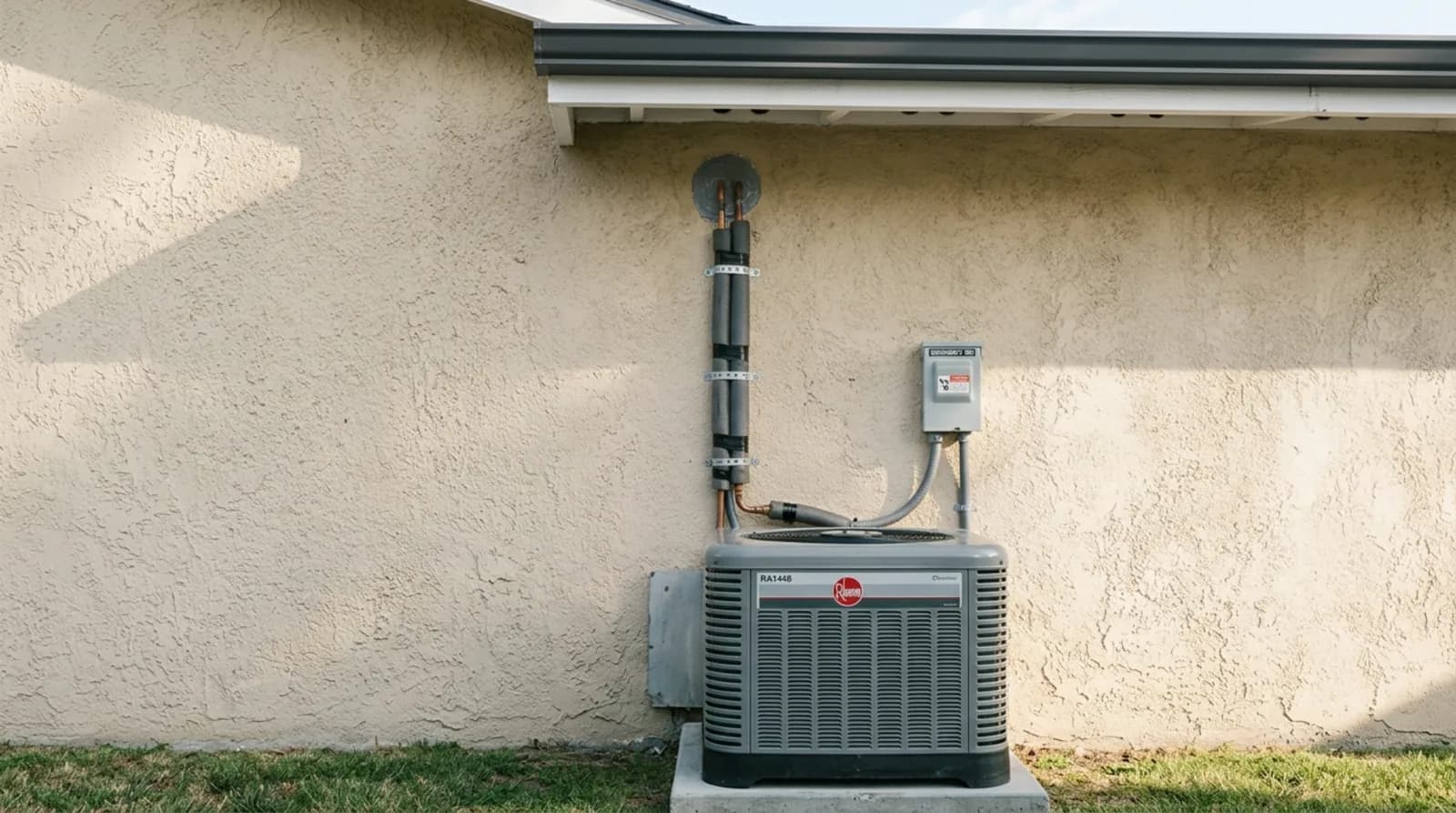
A straightforward central AC replacement — same location, existing ductwork in reasonable condition, standard 3- to 4-ton system — runs roughly $6,000 to $10,000 installed in the Temecula Valley market in 2026. That range covers a Carrier, Trane, or equivalent mid-tier system with proper installation, a permit, and basic commissioning.
What pushes cost higher:
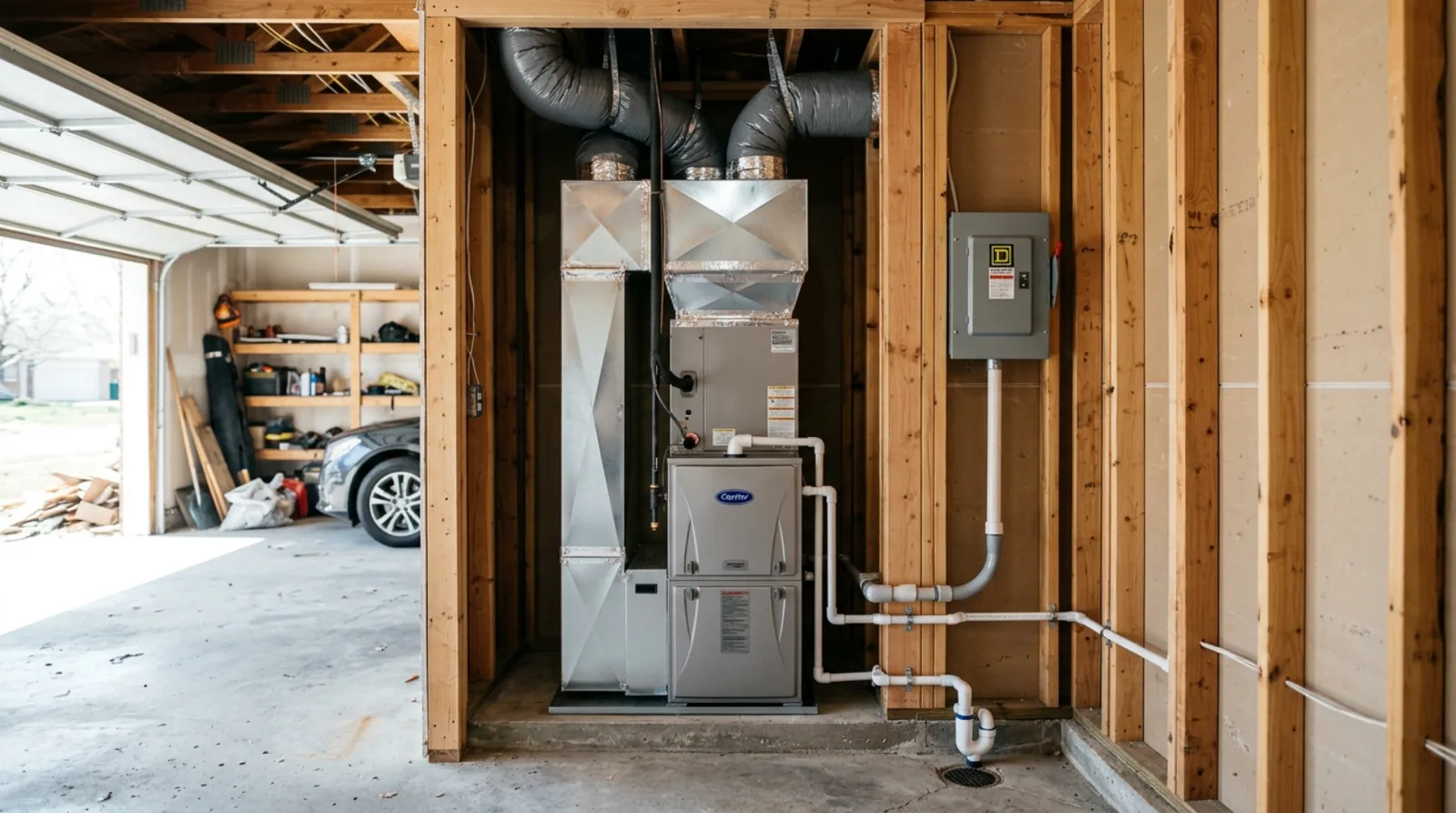
- Moving or replacing ductwork (can add $1,500 to $4,000)
- Upgrading the electrical panel to support a higher-efficiency system (add $800 to $2,500)
- Larger tonnage for bigger homes or homes with high solar load
- Premium equipment brands or higher SEER2 ratings
- Two-story homes where attic access is more difficult
Older homes in Winchester with original flex duct from the 1990s often need ductwork attention before a new system performs correctly. Installing a new 16 SEER2 Trane unit on leaking, undersized ducts is like putting new tires on a car with a bent frame.
Ductless Mini-Splits: A Different Cost Structure
A single-zone ductless mini-split — one outdoor unit, one indoor head, covering a room or addition — typically runs $3,000 to $6,000 installed in our market. Multi-zone systems serving three or four rooms from one outdoor unit can run $8,000 to $14,000 depending on the number of heads, line set routing, and electrical requirements.
Mini-splits make the most sense in specific situations: older Murrieta or Temecula homes where adding ductwork would be prohibitively expensive, converted garages or additions, or homes where one room consistently fails to reach comfortable temperatures regardless of central system adjustments. For a broader discussion of when mini-splits actually win versus central AC, see our post on mini-splits vs. central AC in Temecula Valley homes.
Heat Pumps: Higher Upfront, Lower Operating Cost
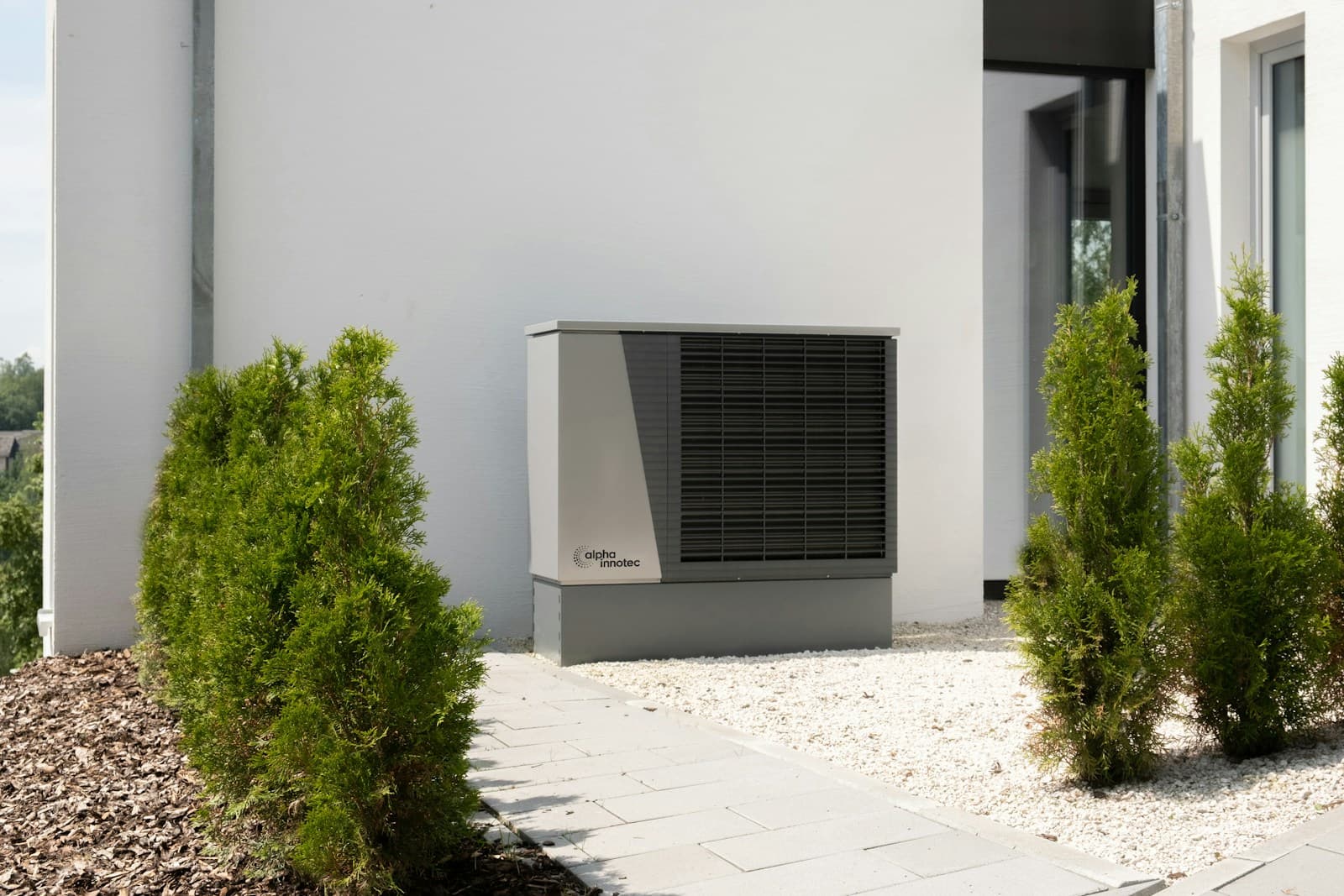
A heat pump handles both heating and cooling from a single system, making it particularly relevant for Temecula Valley homes that use electric furnaces or inefficient wall heaters for winter. In our climate — mild winters, extreme summers — a heat pump is an efficient choice because our heating demand is relatively low and heat pumps excel at mild-temperature heating.
Heat pump installation costs run roughly $8,000 to $14,000 for a whole-home central system in our market. The higher upfront cost compared to a straight AC-only replacement can be partially offset by available incentives. California's TECH Clean California program offers rebates on qualifying heat pump installations, and Southern California Edison also offers rebates for qualifying high-efficiency systems. Actual rebate amounts change — ask your contractor to confirm current availability at the time of installation.
Tonnage: Why Bigger Isn't Always Better
System tonnage (cooling capacity) should be determined by a Manual J load calculation — a formal assessment of your home's square footage, insulation levels, window area, ceiling height, and local climate data. In Menifee's newer two-story homes, that often means a 4- or 5-ton system. A smaller Winchester ranch home with good insulation might be properly served by a 2.5- or 3-ton unit.
Oversizing is a real problem in our market. A system that's too large for the home cools quickly but doesn't run long enough to dehumidify the air properly — which in our low-humidity climate matters less than in coastal areas, but still affects comfort and equipment longevity through excessive short cycling.
Questions to Ask Any Contractor Before Signing
- Are you pulling a permit from Riverside County Building and Safety?
- What is your contractor's license number?
- Does this quote include a Manual J load calculation?
- What is the SEER2 rating of the equipment, and how does it compare to the federal minimum?
- Does the quote include duct testing and sealing, or just equipment swap?
- What warranty covers labor vs. what's manufacturer-only?
What to Do Next
Baker Air Inc. provides free in-home estimates for AC installation across the Temecula Valley — Temecula, Murrieta, Menifee, Wildomar, Winchester, and Lake Elsinore. We'll walk through your home, do a proper load assessment, and give you a written quote that explains every line. No pressure, no mystery pricing. Call (951) 348-0686 or request a free estimate online.
Written by
The Baker Air Team
Family-owned HVAC contractor · Winchester, CA · CSLB #1098493