There is a stubborn myth in Temecula Valley that the way to beat a 105°F afternoon is to buy the biggest air conditioner you can afford. It sounds logical. It is also one of the most common reasons homeowners in Temecula, Murrieta, and Menifee end up with a brand-new system that cools unevenly, runs up the electric bill, and leaves the house feeling clammy.
Sizing is the single most consequential decision in a new HVAC installation, and it gets made before anyone touches a wrench. Here is how it actually works, and what a correctly sized system should feel like in a Temecula Valley home.
What "Sizing" Actually Means
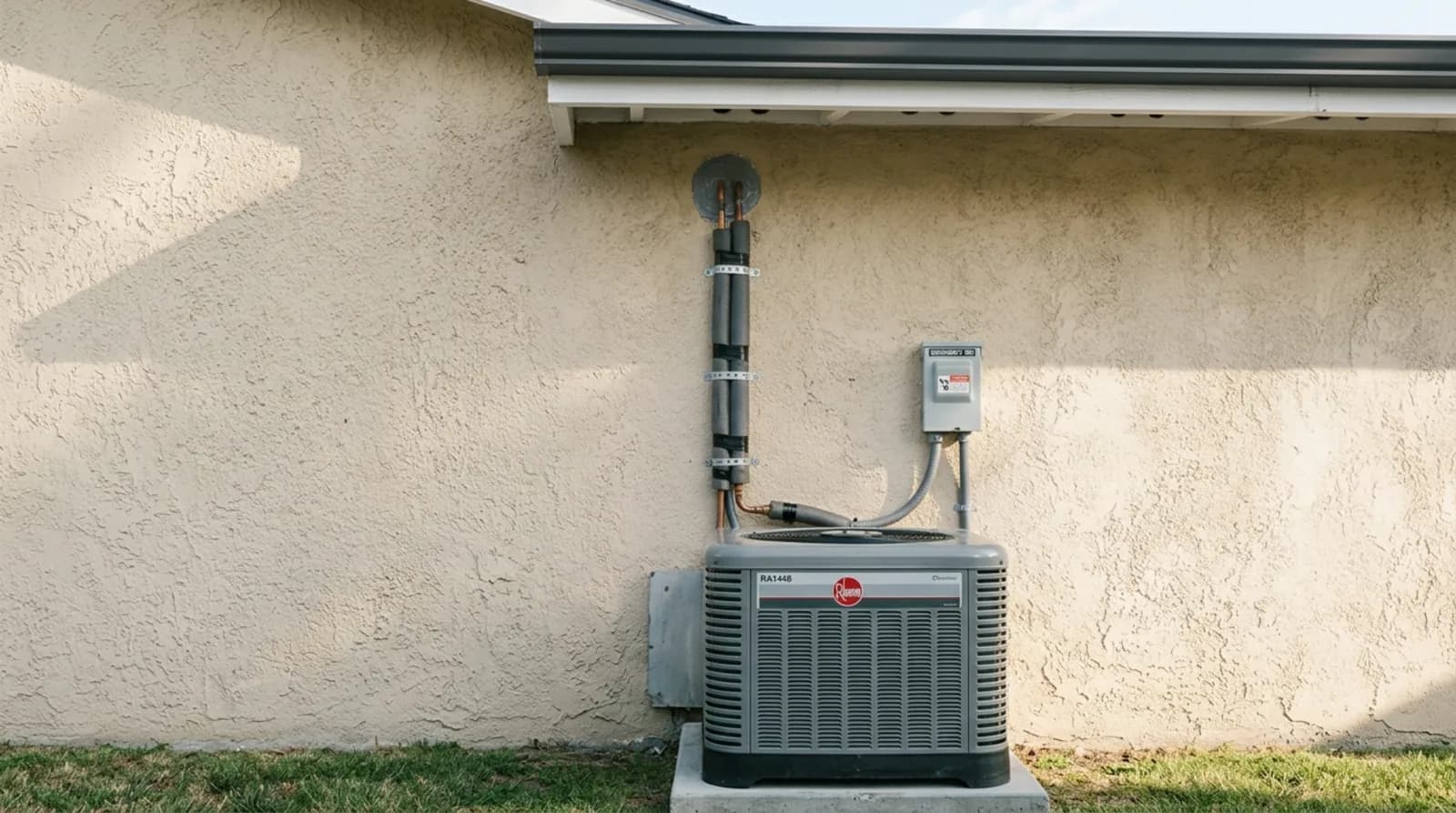
HVAC capacity is measured in tons. One ton equals 12,000 BTUs of heat the system can move out of your home per hour. A typical 2,000-square-foot Temecula Valley home lands somewhere between 3 and 4 tons depending on a dozen variables — but square footage by itself is not a reliable one.
A proper load calculation accounts for ceiling height, window area and orientation, attic insulation R-value, duct location and leakage, shade, air infiltration, the number of people in the home, and the actual design temperature for your ZIP code. ACCA's Manual J load calculation standard is the industry method for this, and it is what a serious contractor uses instead of a rule of thumb.
The Rule of Thumb That Causes the Problem
The shortcut version is "one ton per 500 square feet." It is fast, it is free, and in this valley it is usually wrong in the same direction: too big. Oversizing rarely generates a callback for "it doesn't cool." It generates callbacks for everything else instead.
Rounding up also happens during replacements. If a homeowner in Winchester has a 5-ton unit from 2007 and asks for "the same thing," the replacement inherits a sizing error that may have been made two decades ago — often on a home that has since had new windows, added insulation, or a radiant barrier installed in the attic. All three lower the cooling load.
Why Bigger Feels Worse
An oversized AC cools the air fast, hits the thermostat setpoint, and shuts off. That sounds like a win until you consider the second job an air conditioner does: pulling moisture out of the air. Dehumidification happens across the evaporator coil over time, and a system that runs for seven minutes and quits never runs long enough to do much of it.
The result is a house that reads 74°F on the thermostat and still feels heavy — most noticeable in late July and August, when monsoonal moisture pushes into Riverside County from the southeast. Homeowners respond by dropping the setpoint to 70°F, which costs more and does not fix the underlying problem.
Short Cycling Wears Out the Expensive Parts
Startup is the hardest thing an air conditioner does. Inrush current at compressor start is several times the running current, and every cycle puts thermal and mechanical stress on the compressor, contactor, and capacitor. A right-sized system might run three or four long cycles an hour on a hot afternoon. An oversized one can run ten or twelve short ones.
That is why short cycling shows up so often in diagnostic notes on same-day AC repair calls in newer Menifee and Murrieta subdivisions. Those parts did not fail early because they were cheap. They failed early because they were asked to start four times as often as they were designed to.
Undersized Systems Fail Differently
Undersizing is less common but not rare, and it usually shows up in homes where conditioned square footage was added — a converted garage, a permitted addition, an enclosed patio — without revisiting the HVAC load. The system runs nearly continuously on design days, never reaches setpoint after about 3 p.m., and accumulates compressor runtime far faster than its rated life assumes.
If your system runs constantly in August and still cannot hold 76°F, sizing is worth checking before you assume the equipment is dying. The fix is sometimes a zoning change or a duct correction rather than a whole new system.
Ductwork Is Part of the Sizing Equation
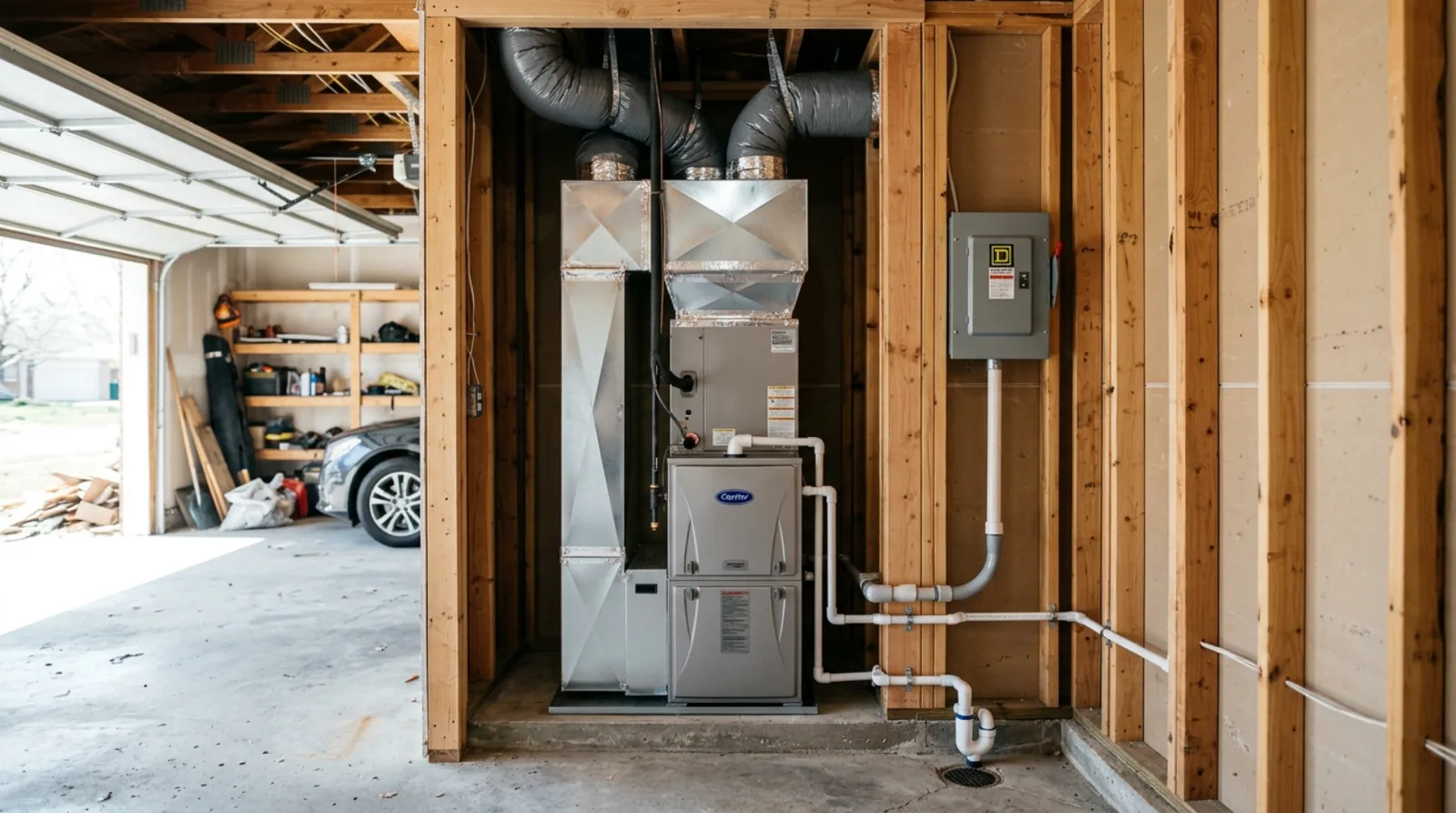
You can install a perfectly sized 4-ton condenser and still get the comfort profile of a 2.5-ton system if the duct network cannot deliver the air. Undersized returns, crushed flex runs in a 140°F attic, and disconnected boots all cap real delivered capacity. That is why the duct system gets inspected before equipment gets quoted, and why leaky ductwork deserves its own conversation in most Temecula Valley homes built before 2005.
Signs Your Current System Is Sized Wrong
- Cooling cycles shorter than about 10 minutes on a hot afternoon
- The house feels cool but damp, or windows fog on humid mornings
- A 5°F or greater spread between rooms on the same floor
- Capacitor or contactor failures more than once in five years
- The system held setpoint easily in June but cannot manage it in August
What a Proper Sizing Conversation Looks Like
When Baker Air quotes a replacement, the visit includes measuring conditioned square footage, checking insulation levels and window glazing, inspecting the duct layout, and asking what actually bothers you about the current system. If a contractor quotes tonnage from the driveway without going into the attic, that number is a guess.
The right-sized system is almost never the biggest one on the quote sheet. It is the one that runs longest on the hottest day of the year without ever needing to run on high.
Sizing and Equipment Type Interact
Variable-speed and two-stage equipment tolerates a small sizing error far better than single-stage equipment, because it can modulate down and keep running instead of cycling off. That is also part of why ductless mini-splits handle add-on rooms and converted spaces so well — each head is sized to the room it serves rather than to a whole-house average.
Before You Sign a Replacement Quote
Ask three questions: What load calculation did you run? What did you find in the attic and the duct system? And why this tonnage instead of one size smaller? A contractor who can answer all three clearly is quoting a system rather than selling a box. Our 2026 AC installation cost breakdown covers what those numbers should look like in this market.
Talk It Through With Baker Air
Baker Air Inc. is a family-owned HVAC contractor based in Winchester, serving Temecula, Murrieta, Menifee, Wildomar, Winchester, and Lake Elsinore. California Contractor License #1098493. If you are weighing a replacement or fighting a comfort problem that repairs have not solved, we will do the load work and show you the math — call (951) 348-0686 or request a consultation online.
Already have a system you like? A seasonal maintenance visit through the Comfy Club keeps a correctly sized system performing the way it was designed to, and catches the airflow problems that make a good system act like a bad one. You can also compare your options across our full installation and upgrade services.
Written by
The Baker Air Team
Family-owned HVAC contractor · Winchester, CA · CSLB #1098493