The filter aisle is quietly one of the most confusing places in a hardware store. One box says MERV 8, the next says MERV 13, a third uses a proprietary number that does not map to either, and the price spread is four to one. Meanwhile the label on the expensive one promises to capture things you did not know were in your house.
For Temecula Valley homeowners the stakes are higher than average, because our air carries a heavier particulate load than coastal Southern California — dry-season dust, agricultural drift from the valley floor, and wildfire smoke several weeks a year. Here is how to choose a filter that helps without choking your system.
What MERV Measures
MERV stands for Minimum Efficiency Reporting Value, a 1-to-16 scale for residential filters that describes what percentage of particles in specific size ranges the filter captures on a single pass. Higher numbers capture smaller particles. The jump from MERV 8 to MERV 13 is not incremental — it is the difference between catching household dust and catching a meaningful share of smoke and fine particulate.
The EPA's guide to air cleaners in the home is the clearest plain-language reference on what filtration can and cannot do, and it is worth reading before you spend money on a whole-home solution.
The Ratings That Actually Matter for Homes
- MERV 1-4: Fiberglass panel filters. They protect the blower motor from lint. They do essentially nothing for air quality.
- MERV 5-8: Pleated filters. Good for dust, pollen, and pet dander. The practical baseline for most homes.
- MERV 9-12: Better capture of finer dust, mold spores, and some smoke particulate. A reasonable target for allergy households.
- MERV 13-16: Captures a significant share of smoke and fine particles. Effective — and the point at which airflow becomes a real design question.
Why Higher Is Not Automatically Better
A filter is a restriction in the airflow path. Denser media means more resistance, measured as static pressure. Residential HVAC blowers are designed for a total external static pressure budget, usually around 0.5 inches of water column, and the duct system typically consumes most of that before the filter is even installed.
Drop a MERV 13 into a system with undersized returns and a one-inch filter slot and you can push static pressure past what the blower can handle. Symptoms: reduced airflow at the registers, a frozen evaporator coil, longer runtimes, and a blower motor working harder than it was built to. In extreme cases the system starts failing in ways that look like a refrigerant problem but are not.
Thickness Solves Most of the Conflict
This is the part most homeowners never hear. A 4-inch or 5-inch media filter at MERV 13 has far more surface area than a 1-inch filter at the same rating, which means lower resistance per unit of filtration. The pleats are deeper, the face velocity is lower, and the pressure drop is a fraction of what the thin version produces.
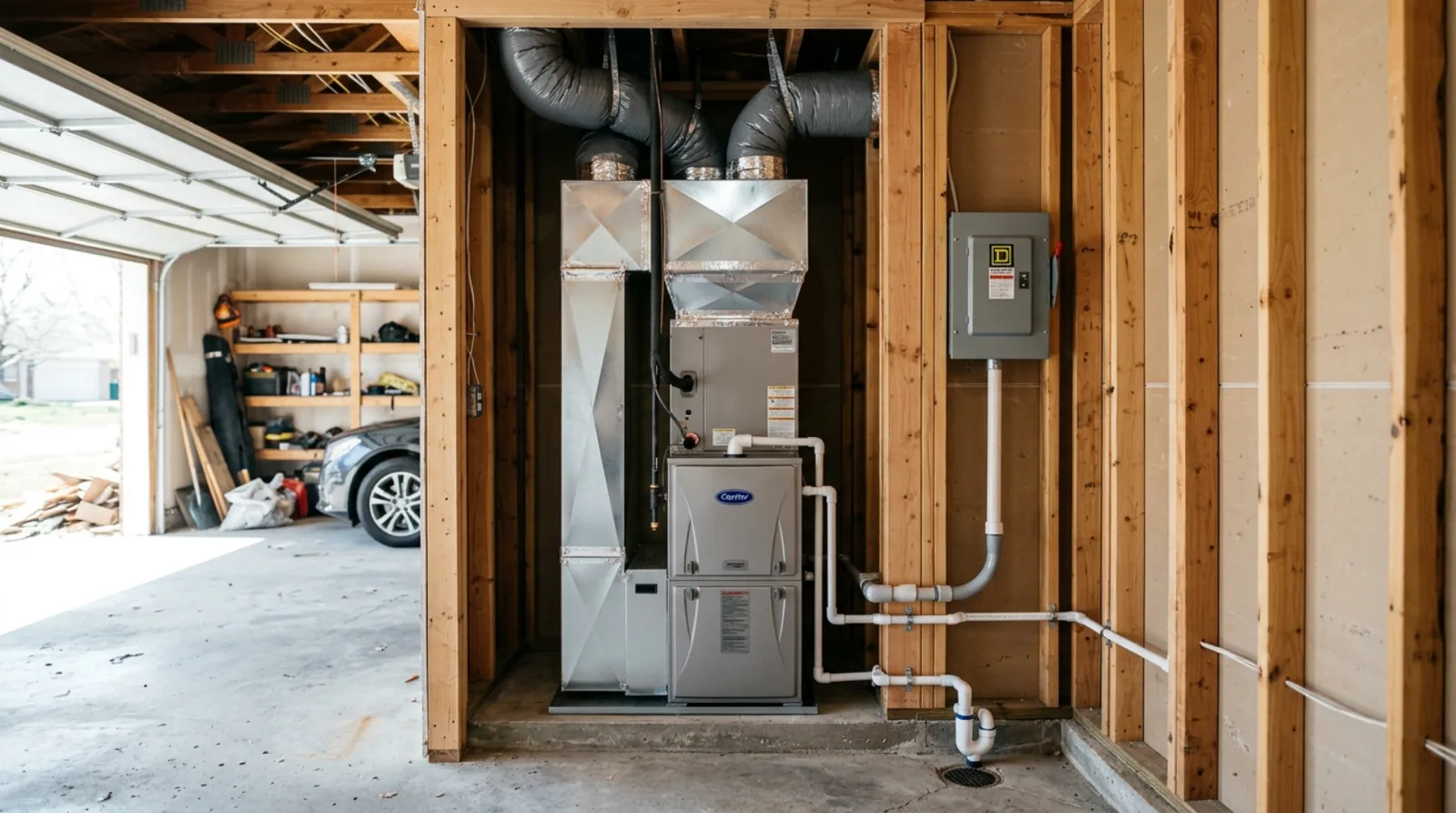
If you want high filtration without the airflow penalty, the answer is almost always a deeper filter cabinet rather than a denser one-inch filter. That is a modification to the return plenum, and it is a straightforward job on most Temecula Valley air handlers.
How Often to Change It Here
Manufacturer schedules assume average conditions. The Temecula Valley is not average during dry season. As a working rule for local homes:
- 1-inch pleated filter: every 30 to 60 days, closer to 30 in summer or with pets
- 4-inch media filter: every 6 to 12 months, checked at the 6-month mark
- During active wildfire smoke: check monthly regardless of type
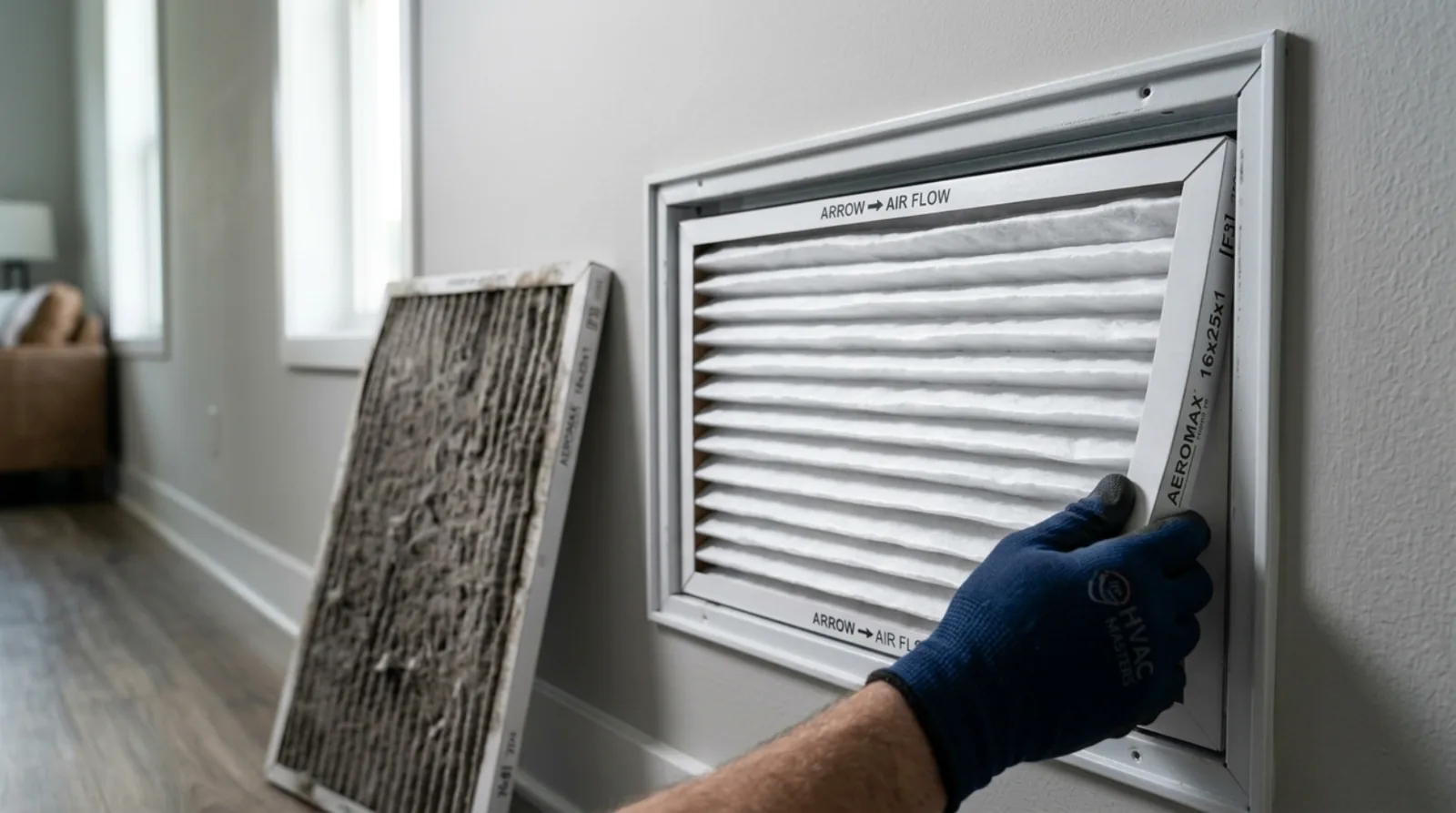
The check that matters is visual. Hold it up to a light. If you cannot see light through the media, the filter is past due and your system is paying for it in static pressure.
What Filters Do Not Do
A filter only treats air that passes through the return. It does nothing about gases, VOCs, or odors, and it does nothing at all when the system is not running — which, in shoulder seasons, is most of the day. It also cannot compensate for a return-side duct leak pulling unfiltered attic air into the stream, which is a common issue covered in our post on leaky ductwork and AC performance.
For homes with real air quality goals, filtration is one layer alongside ventilation, source control, and sometimes UV or standalone purification. Our indoor air quality services page covers how those pieces fit together.
Filters and Smoke Season
Wildfire smoke particulate is mostly in the PM2.5 range, which is exactly where MERV 13 starts to earn its price and where MERV 8 does very little. If smoke days are a recurring concern for your household, upgrading the filter cabinet before fire season is more useful than scrambling during it. We cover the full playbook in protecting indoor air during smoke season.
The best filter is the highest rating your system can move air through comfortably — and knowing that number takes a static pressure reading, not a guess.
Signs Your Filter Choice Is Hurting the System
- Noticeably weaker airflow at registers after a filter change
- A whistling or sucking sound at the filter grille
- The filter visibly bows inward in its slot
- Ice on the refrigerant line or evaporator coil
- Longer cooling cycles with no change in weather
Get the Airflow Measured
Baker Air Inc. is a family-owned HVAC contractor in Winchester serving Temecula, Murrieta, Menifee, Wildomar, Winchester, and Lake Elsinore. California Contractor License #1098493. If you want to know what MERV rating your system can actually handle, we will take the static pressure reading and give you a straight answer — call (951) 348-0686 or request a visit online.
Filter changes and airflow checks are part of every Comfy Club maintenance visit, and if restricted airflow has already frozen a coil or stressed the blower, our repair team can sort it the same day.
Written by
The Baker Air Team
Family-owned HVAC contractor · Winchester, CA · CSLB #1098493