Fire season in Riverside County no longer has a tidy start and end date, but the pattern is familiar enough: a September or October wind event pushes smoke across the valley, the sky goes orange, and the air quality index climbs into ranges where health agencies tell people to stay indoors.
Staying indoors only helps if indoors is actually cleaner. In a lot of Temecula Valley homes it is not, because the same duct leaks and low-grade filters that go unnoticed in normal weather become the path smoke takes into the house. Here is what to do about it — ideally before the smoke arrives.
Know What You Are Filtering
Wildfire smoke is dominated by PM2.5 — particulate matter under 2.5 microns. It stays suspended for long periods, travels a long way from the fire, and is small enough to pass straight through the fiberglass panel filters still installed in many homes. The AirNow air quality and health resource publishes current AQI by ZIP code and explains what each category means for sensitive groups.
Check AQI before you decide how aggressive to be. An AQI of 60 calls for a filter change. An AQI of 180 calls for the full sequence below.
Step One: Close the Envelope
Shut windows and doors and keep them shut. Close any whole-house fan or attic fan — running one during a smoke event pulls outdoor air into the house at a rate no filter can keep up with. If you have a fresh-air ventilation damper on your HVAC system, close it for the duration.
Check the obvious leaks too: dryer vents, bathroom exhaust dampers stuck open, weatherstripping at exterior doors, and the door between an attached garage and the house. Garages fill with smoke quickly and then feed it into the living space every time that door opens.
Step Two: Upgrade the Filter Before You Need It
A MERV 8 filter captures very little PM2.5. MERV 13 captures a substantial share. The catch is that a dense one-inch filter can restrict airflow enough to cause its own problems, which is the tradeoff we break down in our post on MERV ratings and what your system can actually handle.
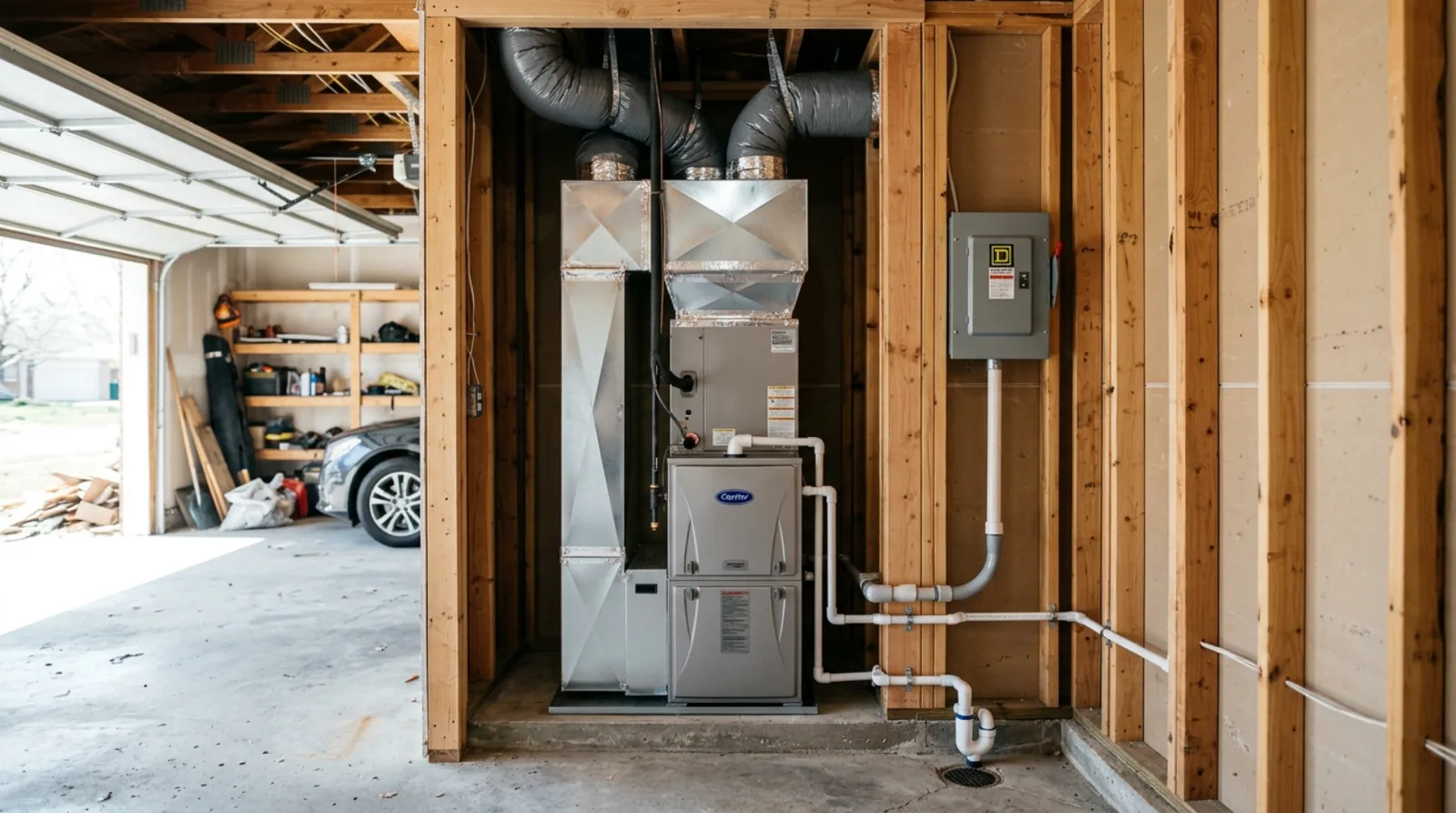
The durable fix is a deeper filter cabinet — a 4-inch or 5-inch media filter at MERV 13 delivers high filtration with a fraction of the pressure drop. That is a modification worth making in spring, not during an active smoke event when you need the system running.
Step Three: Run the Fan, Not Just the Cooling
Your HVAC system only filters air when air is moving through it. Switching the thermostat fan from Auto to On during a smoke event turns the system into a whole-house air cleaner, circulating the full volume of the house through the filter continuously rather than only during cooling calls.
Watch the filter closely if you do this. Continuous circulation during heavy smoke can load a filter in days rather than months, and a loaded filter restricts airflow, which brings its own problems.
Step Four: Add a Clean Room
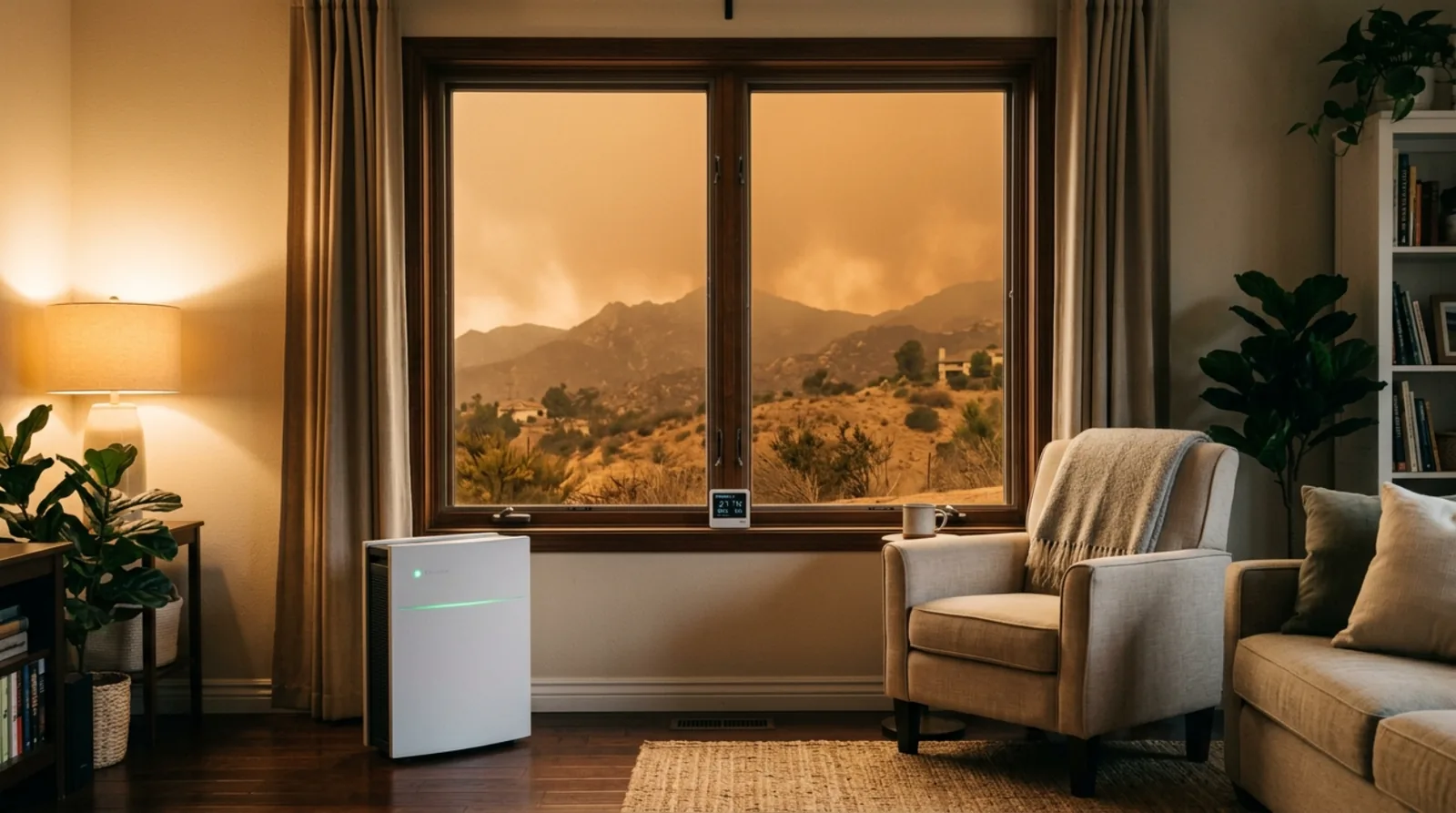
Public health guidance for smoke events centers on creating one well-sealed room with a portable air cleaner sized for the space — usually a bedroom. This is the highest-value intervention for households with asthma, COPD, young children, or older adults, because it gives everyone somewhere to sleep in genuinely clean air even if the rest of the house is only partly protected.
Size the unit to the room's square footage and run it continuously. A single portable unit in a 400-square-foot bedroom does far more good than the same unit parked in an open great room.
What Smoke Does to the Equipment Itself
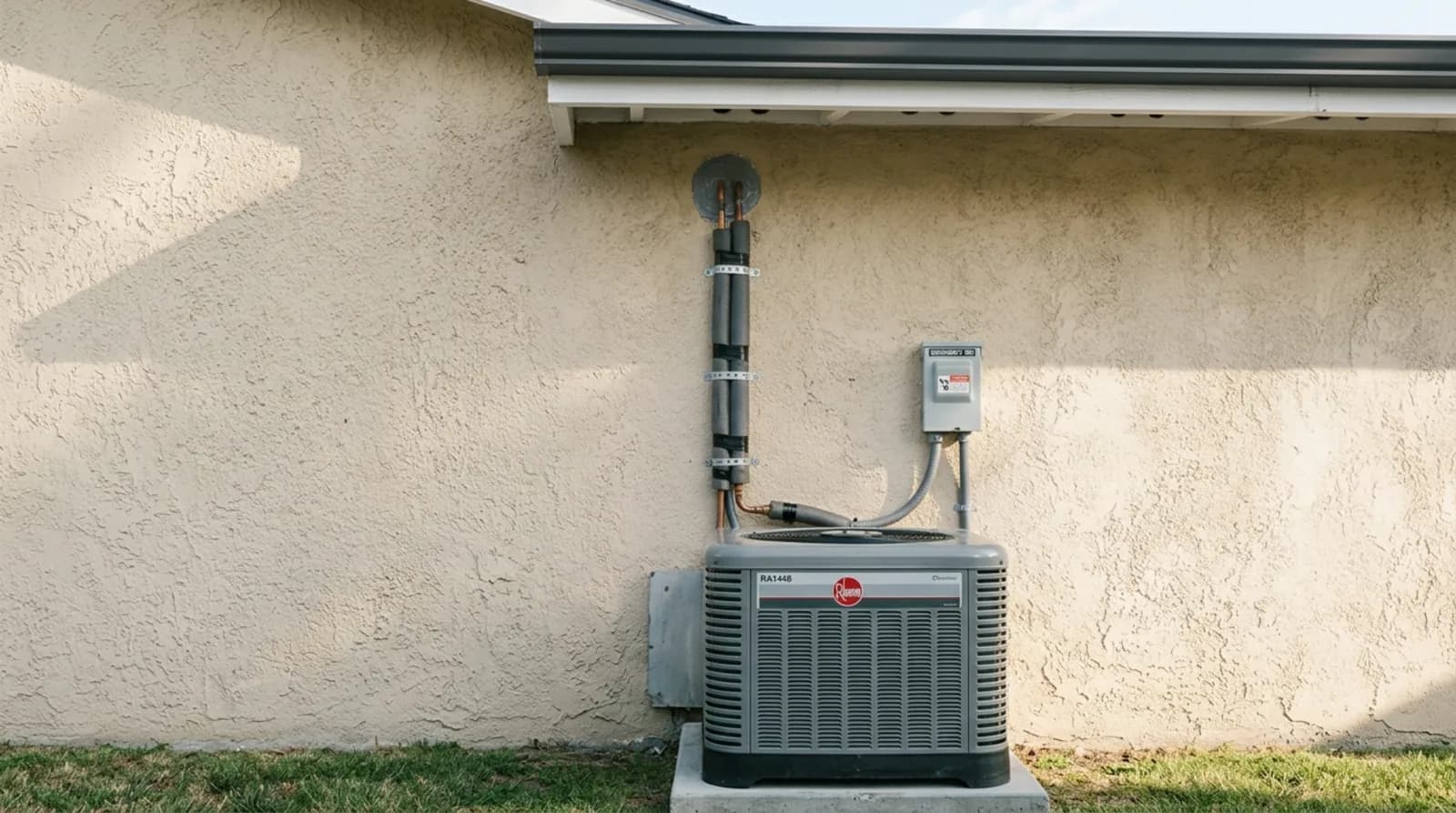
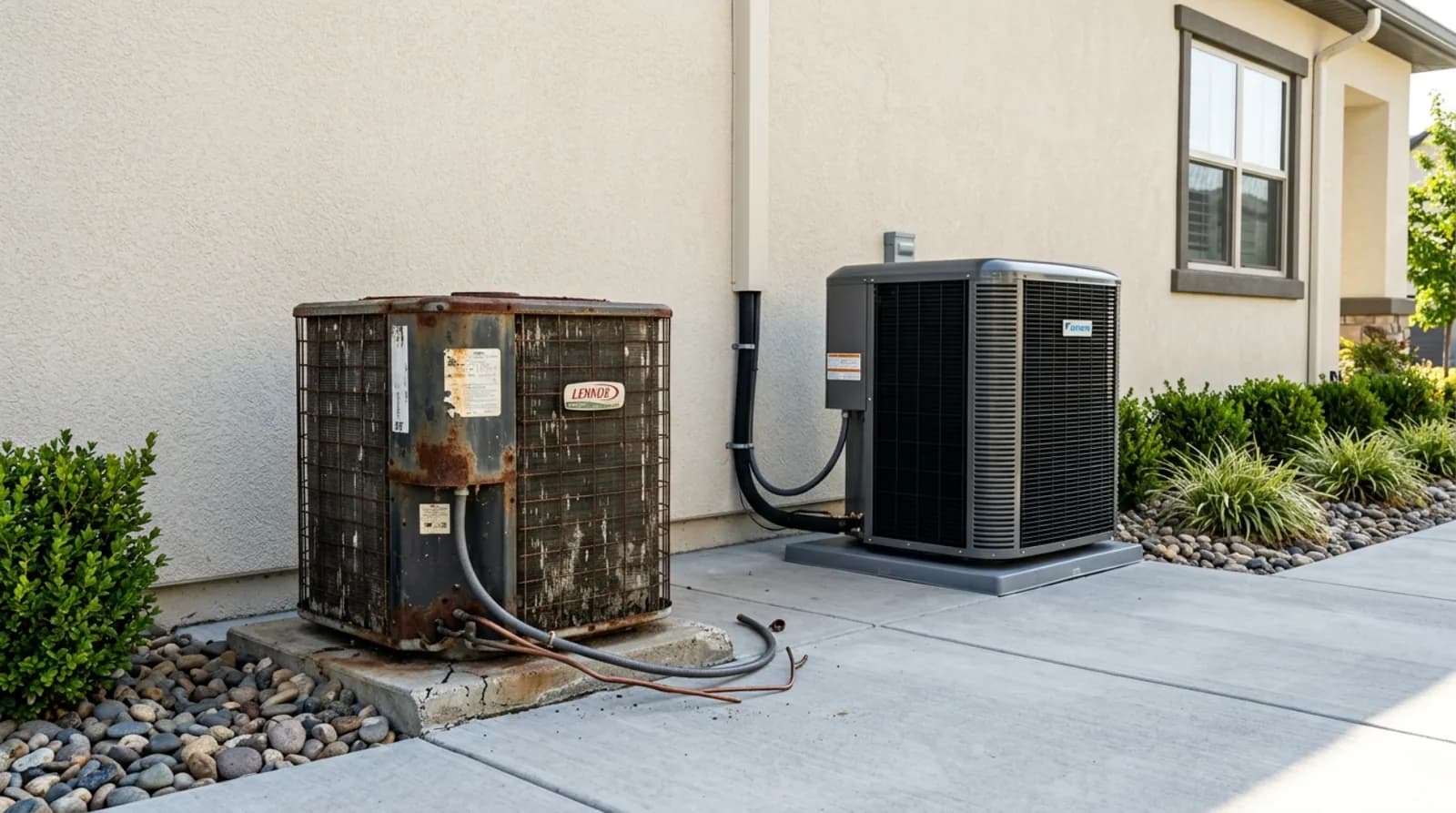
- Ash accumulates on the condenser coil outdoors, raising head pressure and reducing capacity
- Fine particulate loads filters several times faster than normal
- Particulate that bypasses the filter settles on the evaporator coil and restricts airflow
- Smoke odor absorbs into duct interiors and re-releases for weeks afterward
After a significant smoke event, rinsing the condenser coil and replacing the filter should be automatic. If the smell lingers indoors for weeks after the air clears, the duct interiors or the evaporator coil are usually holding it.
Where Duct Leaks Undo Everything
Return-side duct leaks in an attic pull unfiltered attic air — which during a smoke event is essentially outdoor air — directly into the supply stream downstream of nothing. You can install the best filter available and still be pumping smoke through the house. If you have never had the duct system checked, that inspection is the prerequisite for any serious air quality work.
During a smoke event, a sealed duct system and a MERV 13 filter do more for your lungs than any product you can buy that week.
Santa Ana Conditions Make It Worse
The wind events that drive our worst fire weather also drive smoke into homes through pressure differentials, and they load outdoor equipment with debris at the same time. Our guide to prepping an HVAC system for Santa Ana wind season covers the outdoor side of the same preparation.
A Pre-Season Checklist
- Verify the filter rating your system can support, and upgrade the cabinet if needed
- Keep two spare filters on hand through October
- Have the duct system inspected and sealed
- Confirm the fresh-air damper, if present, can be closed
- Identify and equip one clean room
- Clean the condenser coil and check refrigerant charge before peak season
Let Baker Air Set It Up
Baker Air Inc. is a family-owned HVAC contractor in Winchester serving Temecula, Murrieta, Menifee, Wildomar, Winchester, and Lake Elsinore. California Contractor License #1098493. If you want your home ready before the next smoke event, call (951) 348-0686 or book an indoor air quality assessment.
Our indoor air quality services cover filtration upgrades, purification, and ventilation, and a Comfy Club maintenance visit keeps the coil, drain, and filter side of the system in shape year-round. If smoke exposure has already cost you airflow or frozen a coil, our repair team can be out the same day.
Written by
The Baker Air Team
Family-owned HVAC contractor · Winchester, CA · CSLB #1098493