In the Temecula Valley the heating season is short and it arrives abruptly. One week the AC is still running in the afternoon, and then a system that has not produced heat since March gets asked to do it at ten at night.
That gap is why the first cold evening of the year generates more no-heat calls than any other night. Nothing broke overnight. The heating side simply sat untouched for five months and nobody checked it.
Do This Before the First Cold Night
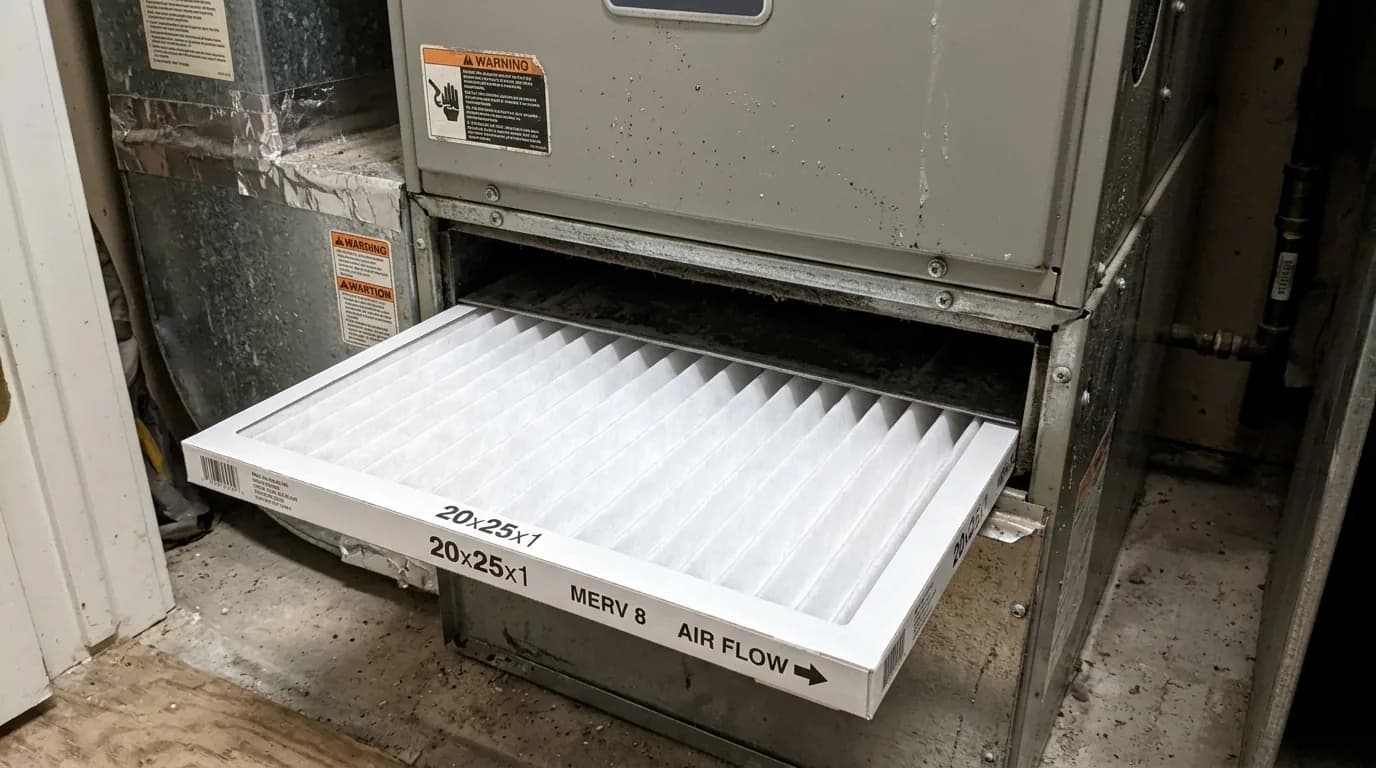
- Replace the filter. It has been in there through the entire cooling season and it is the single cheapest thing on this list. A restricted filter causes short cycling, poor airflow, and overheating on the heating side just as much as the cooling side.
- Run the heat for twenty minutes on a mild afternoon. Deliberately, while it is still warm enough that a failure is an inconvenience rather than a cold night. This is the whole point of the exercise.
- Expect a burning smell, briefly. Dust that settled on the heat exchanger burns off on the first cycle or two. If it persists past that, stop and read our post on what a furnace burning smell actually means.
- Walk every room and check airflow at the registers. Warm air should arrive within a couple of minutes and every supply should be delivering.
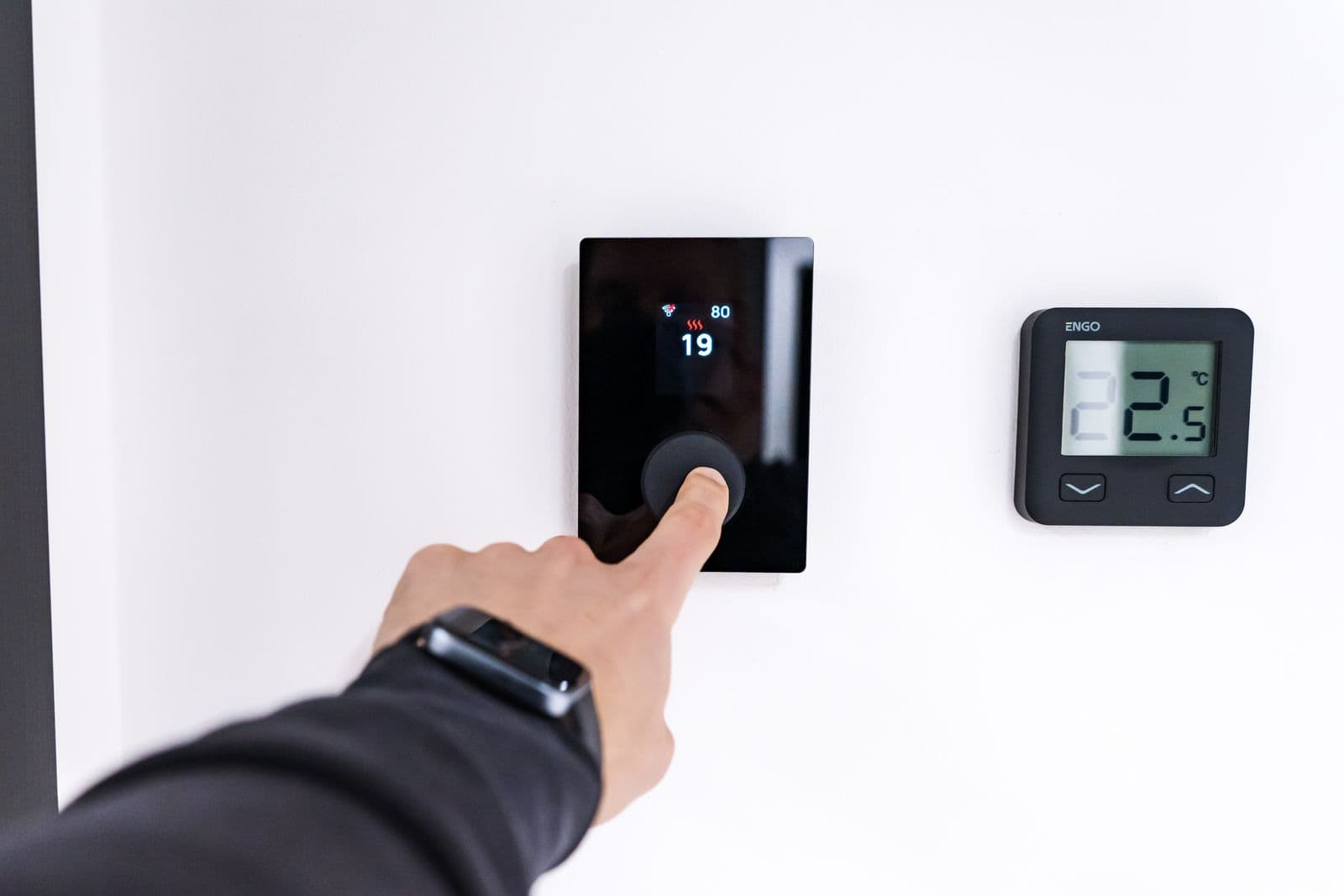
- Check the thermostat schedule. Most people never change the program from the cooling schedule, which means the setbacks are backwards for heating.
- Look at the outdoor unit. Clear leaves and debris from around the condenser, trim vegetation back a couple of feet, and leave it uncovered.
- Test every carbon monoxide alarm and check the manufacture date on the unit itself, not just the battery.
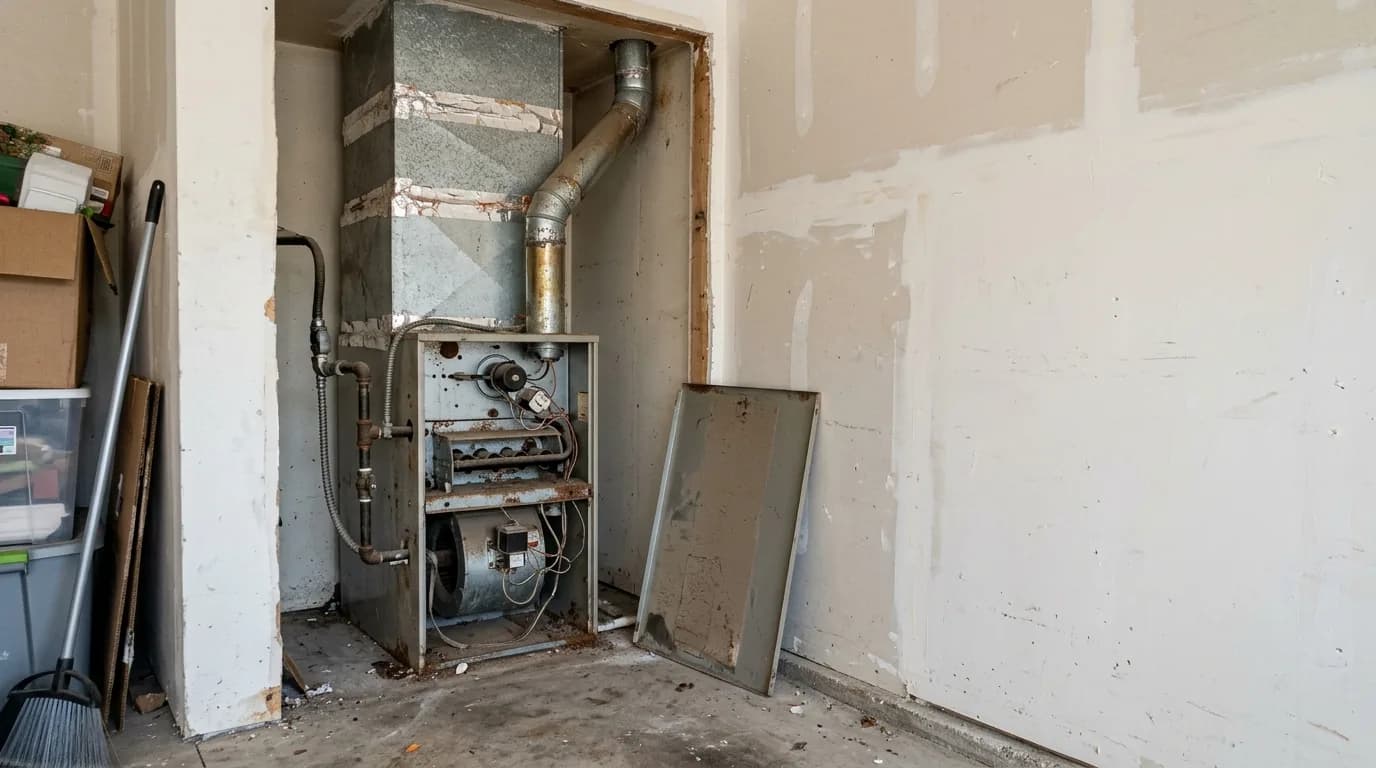
- Clear the area around the furnace. Stored boxes, paint and solvents near a combustion appliance are both a fire risk and an airflow restriction.
What Changes When the System Flips Modes
Homeowners reasonably assume heating and cooling are the same machine doing opposite things. On a conventional split system they share the blower, the ductwork and the thermostat, but almost nothing else.
- The gas furnace has its own burners, heat exchanger, igniter, flame sensor and flue — none of which were used all summer.
- The condensate drain that was running constantly in cooling goes dry, and standing water in the trap can dry out or grow biofilm.
- Airflow requirements differ. A duct system that was adequate in cooling can feel weak in heating, because warm air is less dense and behaves differently in the room.
- The thermostat is calling for a completely different sequence of operations, which is why a control board fault can show up in one mode and not the other.
If you have a heat pump rather than a furnace, the changeover is less dramatic because it is the same refrigerant circuit running backwards — but the defrost cycle and the auxiliary heat strips also get their first use of the year. Our comparison of heat pumps against AC and gas furnace covers how that equipment behaves in this climate.
The Ductwork Problem Nobody Sees
Most homes in the valley have ductwork running through an unconditioned attic. In summer that attic is punishingly hot and leaky ducts dump cooled air into it. In winter the same leaks pull cold attic air into the supply side, so the air arriving at the register is cooler than what left the furnace.
The symptom is a house that heats slowly and unevenly, with the furnace running long cycles and the thermostat never quite satisfied. We covered the mechanism in detail in our post on how leaky ducts hurt system performance, and the heating season version of the problem is identical.
Signs the Heating Side Needs Attention Now
- The system runs but the air from the registers is lukewarm rather than hot
- Short cycling — the furnace fires, runs briefly, shuts off, and repeats
- A rumble, bang or boom at ignition rather than a smooth light-off
- Any smell of gas, at any time, anywhere near the equipment
- Soot or black dust around supply registers
- A burning smell that does not fade after the first couple of cycles
- Rooms that were fine last winter and are noticeably colder this year
The ignition noise is the one most people tolerate. A delayed ignition means gas is accumulating briefly before it lights, and that is a wear problem on the heat exchanger that gets worse rather than better.
Why Fall Is the Right Time to Book Service
A heating tune-up in late September or early October is a scheduled appointment at a normal rate. The same work on the first genuinely cold night of the year is an emergency call behind a queue of other emergency calls.
A proper heating inspection covers the heat exchanger, burners, igniter, flame sensor, gas pressure, flue draft and safety controls — the components that cause both the no-heat calls and the genuinely dangerous failures. That is what preventative maintenance is for, and the spring equivalent is in our spring tune-up checklist.
Serving Temecula, Murrieta, Menifee, Winchester, Wildomar and Lake Elsinore. Call (951) 348-0686 or book a heating inspection before the first cold night rather than during it.
Written by
The Baker Air Team
Family-owned HVAC contractor · Winchester, CA · CSLB #1098493