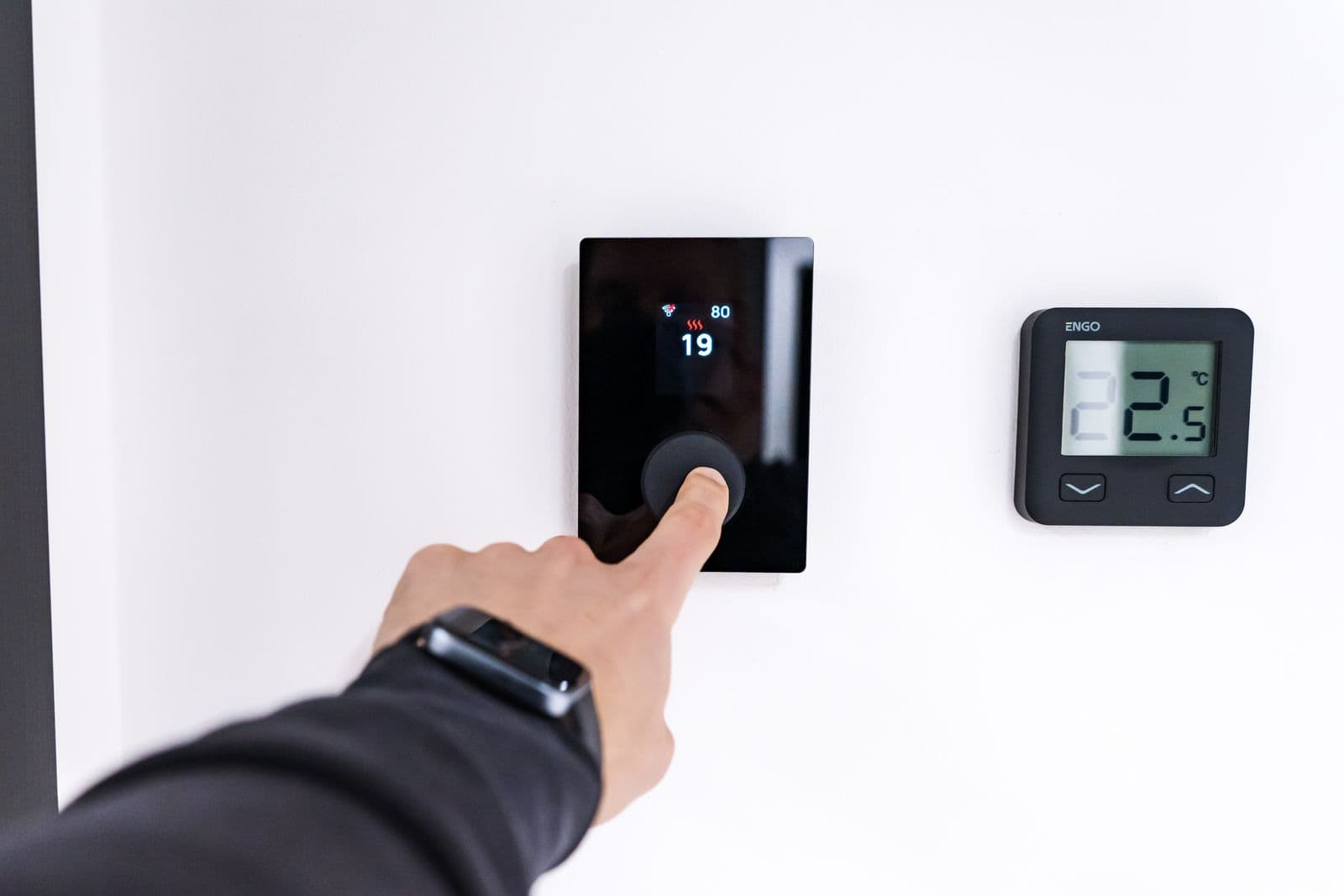
A hot, slightly acrid smell the first time you run the heat each year is almost always dust burning off the heat exchanger, and it is harmless. It should fade within one or two cycles — call it thirty minutes of operation — and then not come back.
That is the common case. The reason it is worth knowing the others is that two of them are genuinely urgent, and they are easy to talk yourself out of at eleven at night.
The Normal One: Dust Burn-Off
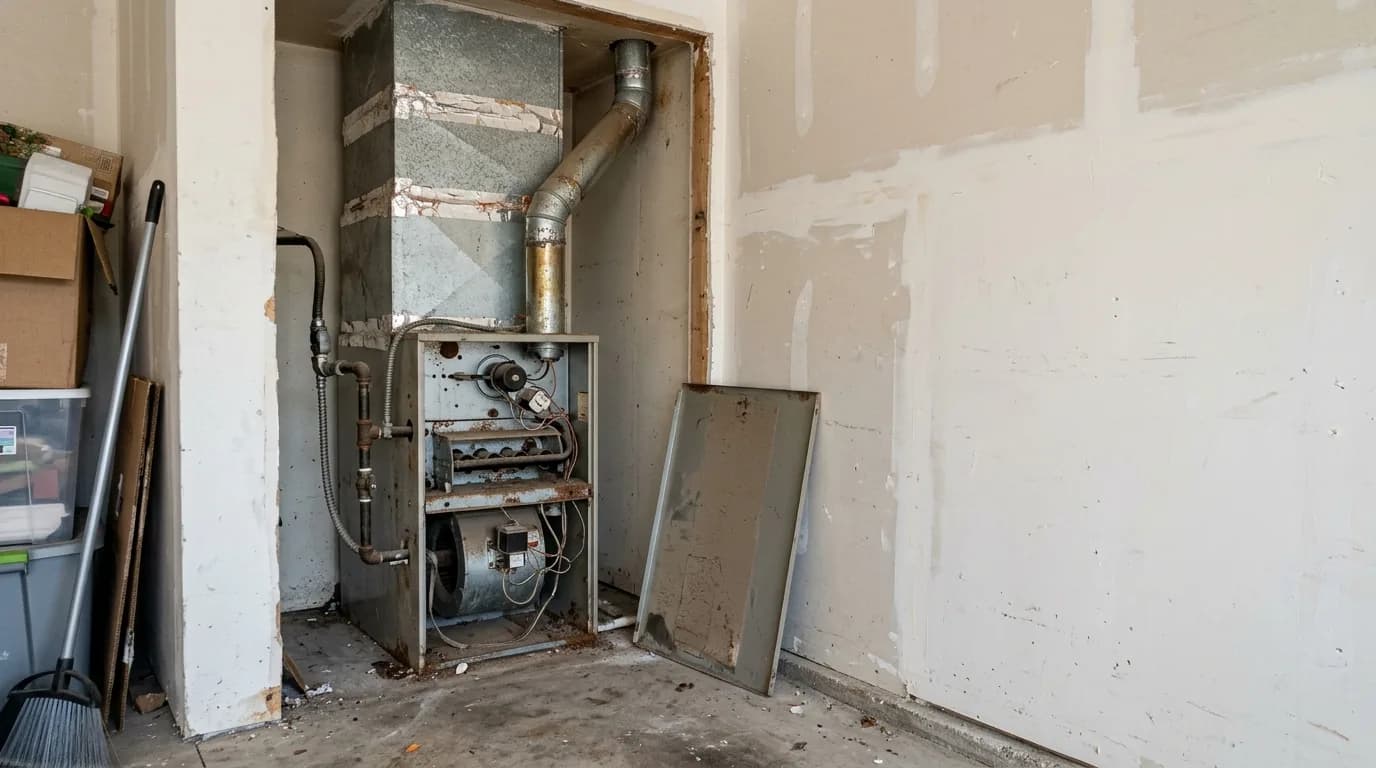
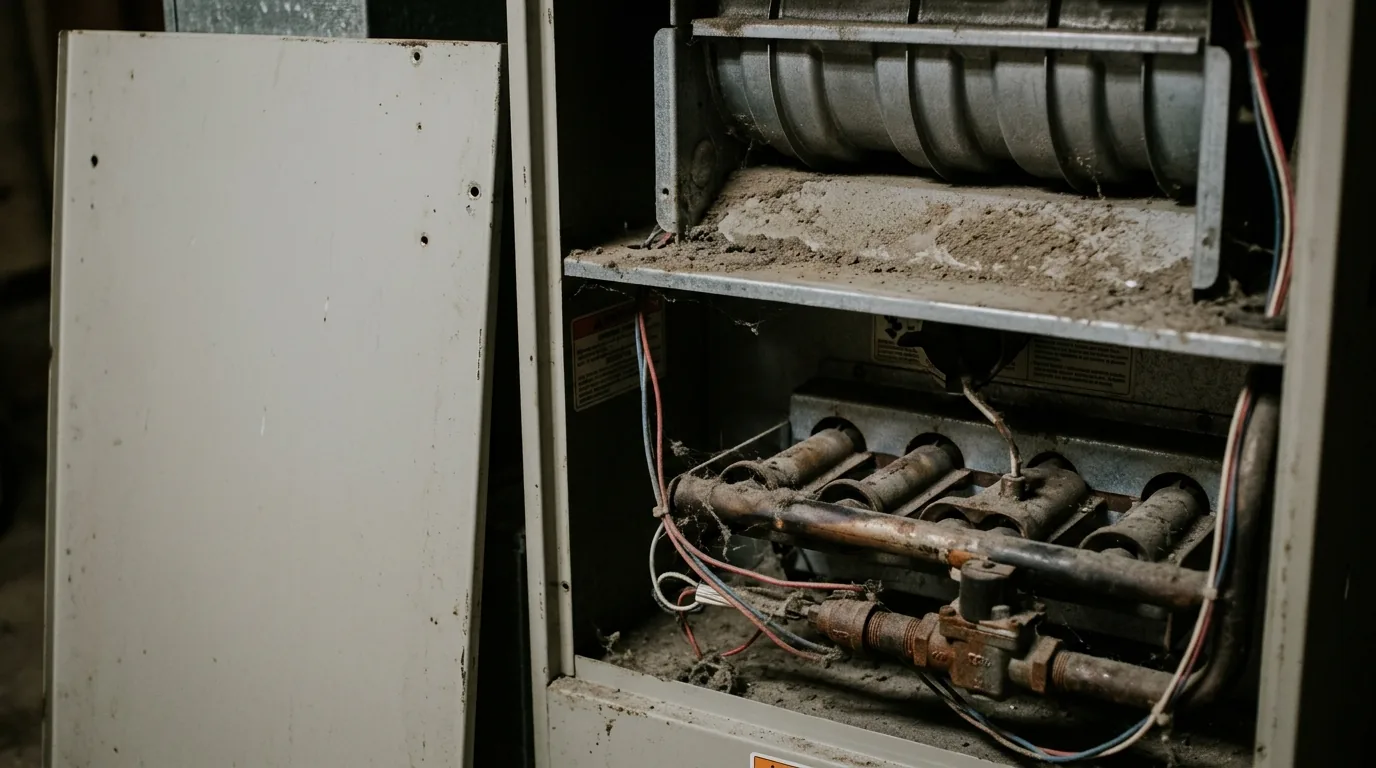
Your furnace sat idle from roughly March to October. In that time dust settles on the heat exchanger and the burner assembly. The first time those surfaces reach operating temperature, that dust burns, and it smells exactly like a space heater used for the first time in a year.
What makes it normal is that it fades and does not return. Open a couple of windows, let it run, and it will clear. What makes it abnormal is persistence. Dust only burns off once; a burning smell on the third day is not dust.
The Smells That Mean Stop
Gas, or rotten eggs
Leave the house. Do not flip switches, do not use the garage door opener, do not look for the source. Call the gas utility from outside, then call us. Natural gas is odorless on its own — the rotten-egg smell is an additive put there specifically so this decision is easy.
Burning plastic or electrical
Shut the system off at the thermostat and then at the breaker. This is wiring, a failing blower motor, or a component overheating, and it is a fire risk rather than an annoyance. Do not run it again to see whether it does it twice.
Smoke, or a sooty smell with black dust at the registers
Combustion products are entering the living space rather than going up the flue. That means a cracked heat exchanger, a blocked flue, or a combustion problem, and all three carry a carbon monoxide risk. Shut it down and get it inspected before running it again. Our post on carbon monoxide and gas furnace safety covers what is actually happening in that scenario.
A persistent musty or sour smell
Not a combustion issue. Usually moisture somewhere in the system — a condensate pan that did not fully dry out after the cooling season, or biological growth in the ductwork. It is an air quality problem rather than a safety one, and it is covered under indoor air quality work.
Oil or chemical smell
Sometimes a new motor breaking in, sometimes a refrigerant issue on a heat pump, sometimes something stored too close to the equipment. Worth a look rather than worth panicking about.
A Quick Decision Table
- Hot dusty smell, first cycle of the year, fades — normal, ventilate and carry on
- Same smell still there on day three — call for service
- Gas or rotten eggs — leave the house, call the gas utility from outside
- Burning plastic or electrical — off at the breaker, call for service
- Smoke or soot at the registers — shut down, do not run, call for service
- Musty or sour — not urgent, book an air quality assessment
Why It Happens More in This Valley
Two local factors make first-run smells more pronounced here than in places with longer heating seasons. The idle period is longer — five to seven months rather than two or three — so more dust accumulates. And our dust load is genuinely high, with dry summers, Santa Ana wind events and a lot of homes backing onto open ground. Our post on Santa Ana wind HVAC preparation covers what those events put into a system.
A filter that has been in place since spring makes all of it worse, because the dust that should have been captured is instead sitting on the heat exchanger. Changing it before the first heat run is the cheapest prevention available, and our guide to MERV ratings covers choosing the right one.
When to Just Call
If the smell is gas, smoke, or anything electrical, the decision is made for you. For everything else, the useful threshold is simple: a smell that fades is dust, and a smell that persists or returns at full strength every cycle is a fault. Guessing past that point costs more than the diagnostic does.
Baker Air serves Temecula, Murrieta, Menifee, Winchester, Wildomar and Lake Elsinore, California Contractor License #1098493. Call (951) 348-0686 for repair service, or get in touch to book an inspection.
Written by
The Baker Air Team
Family-owned HVAC contractor · Winchester, CA · CSLB #1098493